Quick Facts
- Primary Benchmark: 38% of room length from the front or back wall.
- The Goal: Minimize axial room modes and standing waves.
- The Danger Zone: Avoid the 50% mark at all costs to prevent bass nulls.
- Origin: Concept developed by renowned studio designer Wes Lachot.
- Flexibility Range: Most sweet spots fall between 35% and 43% of room depth.
- Constraint: Best applied in rectangular rooms firing down the longest dimension.
Discovering the perfect listening position is the single most important upgrade for any audiophile. While expensive gear helps, the 38% rule—originally proposed by studio designer Wes Lachot—provides a scientific benchmark to find your room's acoustic sweet spot by avoiding destructive room modes. This calculation helps ensure that what you hear is an accurate representation of the recording, rather than the distorted reflections of your own walls.

What is the 38% Rule?
The 38% rule is an acoustic guideline suggesting that the most balanced listening position in a rectangular room is found at 38% of the room's total length from either the front or back wall. Originally proposed by professional studio designer Wes Lachot, this position helps minimize the negative impact of room modes and standing waves. It is specifically designed to move the listener away from the 50% midpoint, where low-frequency cancellations and peaks are typically most severe.
To implement the 38% rule, measure the distance from your room's front wall to the back wall and multiply that length by 0.38. Place your listening chair at this resulting distance from the front wall, ensuring the seat is centered exactly between the two side walls for symmetrical stereo imaging. While this distance is the theoretical sweet spot, audiophiles often use it as a starting point, making micro-adjustments between 35% and 43% to account for specific room furniture or gear placement.
Finding the correct listening position is essential for avoiding bass nulls and frequency response variations caused by room resonance. Sitting exactly in the center (50%) of a room often results in a massive loss of bass due to phase cancellation, while sitting too close to walls can cause boomy low-frequency buildup. By staying near the 38% mark, you ensure a more accurate representation of the audio, better soundstage depth, and a flatter response across the frequency spectrum. This is widely considered the critical listening position for anyone serious about high-fidelity sound.
The Physics of Sound: Why 50% is the Enemy
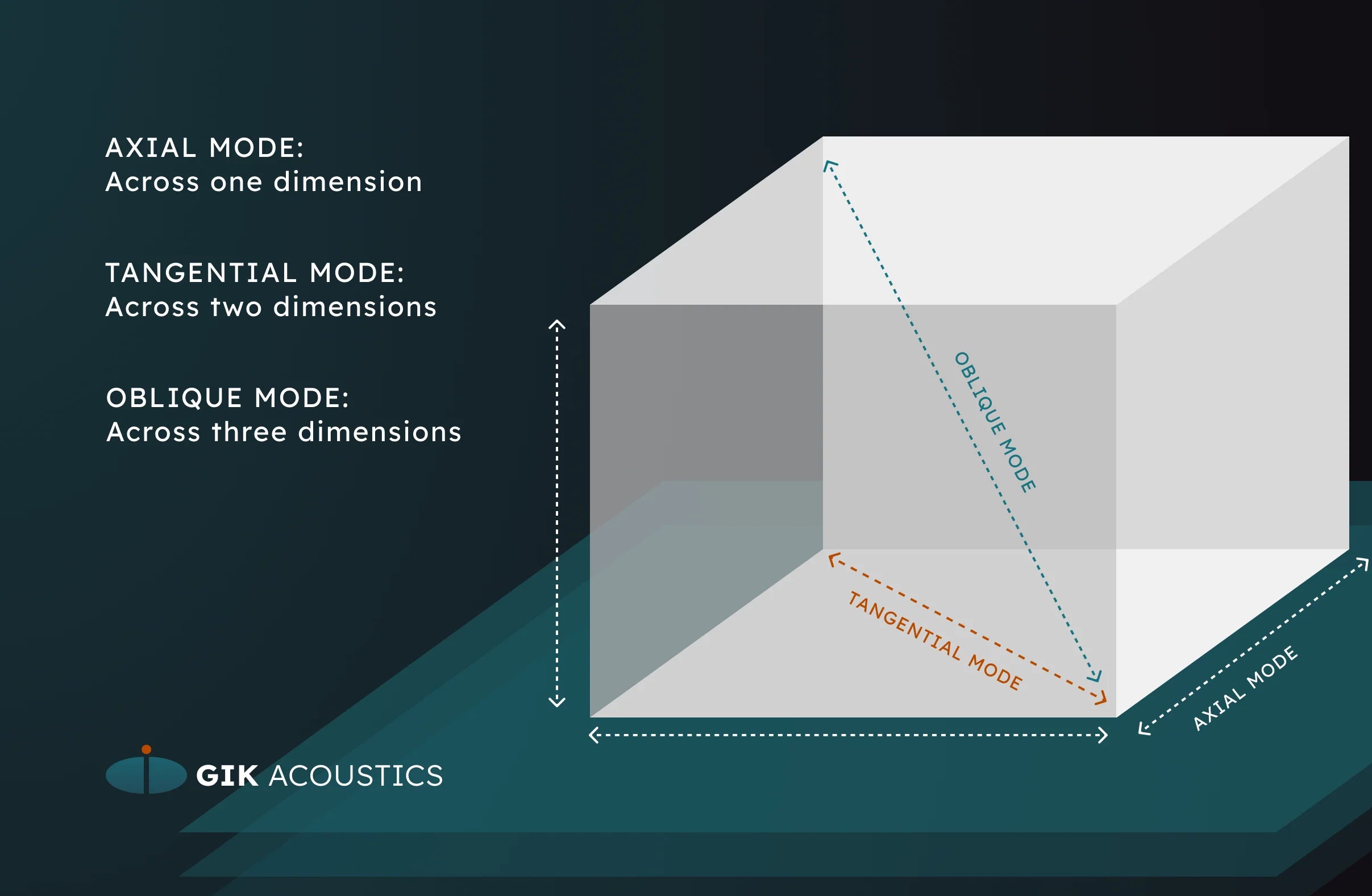
To understand why the 38% rule works, we have to talk about how sound behaves in a closed space. When your speakers push air, the sound waves bounce off your walls. In a rectangular room, these waves reflect back and forth, colliding with new waves coming from the speakers. This interaction creates standing waves—stationary patterns of high and low pressure that can make your favorite track sound either incredibly boomy or strangely thin.
These patterns are known as room modes. The most problematic area in any rectangular room is the 50% mark, the exact midpoint between the front and back walls. This is a massive "No-Go Zone" because it is the primary node for the fundamental standing wave. If you place your chair here, you are sitting in a bass null listening position. You could spend ten thousand dollars on a pair of subwoofers, but if you are sitting at the 50% mark, the low frequencies will physically cancel each other out before they reach your ears. You will hear a hollow, articulate-free low end where the kick drum has no "thump" and the bass guitar lacks foundation.
By avoiding 50% listening position setups, you sidestep the most aggressive phase cancellation. Other problematic spots include the 25% and 75% marks, where odd and even harmonics create significant peaks and dips in the frequency response. The mathematical basis for the rule is intended to minimize the influence of standing waves and room modes by placing the listener in a "zone of neutrality" where the modal distribution is most even.
How to Find Your Listening Position: Step-by-Step
Setting up your room doesn't require a degree in physics, but it does require a tape measure and a little bit of patience. Follow these steps to find your optimal listening position.
- Measure the Length: Use a laser measure or a standard tape to find the total distance from the front wall (the wall the speakers face away from) to the back wall.
- Calculate the Spot: Multiply that total length by 0.38. For example, if your room is 20 feet long, your target distance is 7.6 feet from the front wall.
- Place the Chair: Position your recommended audio chair placement so that your ears will be at that 7.6-foot mark.
- Confirm Symmetry: A symmetrical listening position setup is non-negotiable for a convincing soundstage. Ensure your chair is exactly halfway between the left and right side walls. If you are off by even a few inches, the stereo imaging will pull to one side, and the center image (usually the vocalist) will feel smeared.
Scientific Insight: The 40cm Apex Offset While many guides suggest forming a perfect equilateral triangle with your speakers, experts often recommend a slight offset for better stereo imaging. Instead of having the speaker axes cross exactly at your ears, aim for the intersection point to be roughly 40cm (about 16 inches) behind your head. This increases the width of the soundstage and helps the speakers "disappear" into the room.
Once you have established the base position, check your reflection points. Sound bouncing off side walls can cause comb filtering, which makes the high end sound harsh. Using basic acoustic panels at these first reflection points will complement your new chair placement and bring out the micro-details in your music.
Small Room Hacks: Measuring from the Rear Wall
In the real world, we aren't all blessed with dedicated 30-foot listening halls. In a bedroom or a small home office, sitting 38% of the way into the room from the front wall might put you right on top of your desk or too close to a large TV screen.
In these cases, the 38% rule can be applied from the back wall instead. Acoustically, the node distribution is mirror-imaged. However, sitting 38% from the rear wall brings a different set of challenges. Because you are closer to the rear boundary, you are more likely to experience low-frequency buildup—that "chest-thumping" bass that sounds powerful but lacks definition.
To make this work in a listening position in rectangular room scenarios, you must invest in bass traps. Placing thick absorption in the rear corners and potentially a cloud on the ceiling will help manage the pressure buildup. Without treatment, sitting closer to the back wall can make the audio feel claustrophobic and flabby.
Beyond the Chair: The 83% Rule and Speaker Placement
Your chair is only half of the equation. Once you have found your acoustic sweet spot, you need to bring the speakers into alignment. A common professional standard is the 83% rule, which suggests that the distance between your speakers should be approximately 83% of the distance from each speaker to the listener's ear.
For example, if you are sitting 10 feet away from each speaker, the speakers themselves should be about 8.3 feet apart. This ratio, combined with your 38 percent listening position, creates a cohesive soundstage where the music feels like a three-dimensional performance rather than two separate boxes making noise.
Small adjustments here make a massive difference. Moving your chair just 6 inches forward or backward can shift the frequency response by as much as 8dB at certain frequencies. This is why we treat the 38% figure as a starting point. If you find the bass is a bit too lean at exactly 38%, try sliding back to 40% or 42%. The goal is to find the perfect balance between bass impact and vocal clarity.

Validation: The 'Walk-Test' and Room EQ Wizard (REW)
Mathematics provides the map, but your ears provide the destination. To verify your new setup, I always recommend the "walk-test." Play a track with a consistent, repetitive bass line—something like "Flight of the Cosmic Hippo" by Béla Fleck or a clean synth-bass track.
Start at the front wall and slowly walk toward the back of the room. You will hear the bass swell in intensity, then almost completely vanish as you pass the 50% midpoint, and then surge again as you approach the rear wall. When you reach your marked 38% spot, notice how the bass sounds even, tight, and melodic. It should sound like a musical note rather than a generic vibration.
For the tech-inclined audiophile, you can use a measurement microphone and software like Room EQ Wizard (REW). This allows you to visualize the frequency response and identify the Schroeder Frequency—the point (usually around 200-300Hz) where the room's influence begins to dominate the speaker's output. Comparing a measurement at the 50% mark versus the 38% mark will usually show a massive "grand canyon" dip in the low-end at the midpoint, proving why the rule is so vital.

FAQ
What is the 38 rule listening position?
The 38 rule listening position is an acoustic guideline for rectangular rooms that suggests placing the listener at 38% of the room's total length from either the front or back wall. This position is mathematically derived to provide the most neutral frequency response by avoiding the worst room modes and standing waves.
How to find listening position?
To find the listening position, measure the distance from the front wall to the back wall of your room. Multiply this length by 0.38. Place your chair so your ears are at this calculated distance from the front wall, ensuring you are also perfectly centered between the side walls.
How far should speakers be from listening position?
The distance depends on your room size, but a common starting point is to form an equilateral triangle where the distance between the speakers is equal to the distance from each speaker to the listener. Using the 83% rule (where speakers are slightly closer together than they are to the listener) can often improve stereo imaging.
What does listening position mean?
Listening position refers to the specific physical location in a room where an individual sits to listen to audio. In high-end audio and studio design, this position is carefully chosen to minimize acoustic distortions like phase cancellation and bass buildup, ensuring the most accurate sound possible.
What is the 83% rule for speakers?
The 83% rule is a guideline for speaker spacing relative to the listener. It suggests that the distance between the two speakers should be about 83% of the distance from the speakers to the listener’s head. This creates a slightly narrower angle than a perfect equilateral triangle, which can help focus the center image and improve soundstage depth.