Quick Facts
- Release Date: June 2026 (Announced at Build)
- Core OS: Microsoft Device Ecosystem Platform (AOSP-based)
- Key Tech: Just-in-time UI, Large Action Models (LAMs)
- Hardware: Qualcomm wearable chip, 5G, Side-camera, fingerprint sensor
- Primary Use Case: Frontline and deskless workforce productivity
- Cloud Integration: Microsoft Graph and Entra ID managed
Microsoft has officially unveiled Project Solara, a revolutionary enterprise ai wearable badge designed to redefine hands-free productivity for the modern workforce. Arriving in 2026, this device marks a shift from consumer-centric pins to industrial-grade ambient computing. Microsoft Project Solara is an enterprise ai wearable badge powered by the Microsoft Device Ecosystem Platform (MDEP), designed specifically for frontline workers in healthcare, logistics, and retail to access Copilot agents hands-free.
Rethinking Productivity: From Apps to AI Agents
For decades, our interaction with mobile devices has been defined by the "Model of Rectangles"—a grid of applications that requires manual navigation, constant context switching, and significant cognitive load. Project Solara moves away from this traditional paradigm by introducing an agent-first platform. Instead of opening an app to report an inventory shortage or check a patient record, the device anticipates the user's needs through environmental context.
The Project Solara wearable introduces a just-in-time UI which dynamically builds the interface based on the task at hand. Instead of a fixed menu, the device adapts its screen to show specific buttons for actions like document scanning or data uploading as needed. This approach is tailored for deskless workers who require ambient computing solutions that respond to environmental context without manual navigation. By utilizing Large Action Models, the device can execute complex workflows—such as filing an insurance claim or ordering warehouse stock—simply through voice commands or visual triggers identified by its side-facing camera.
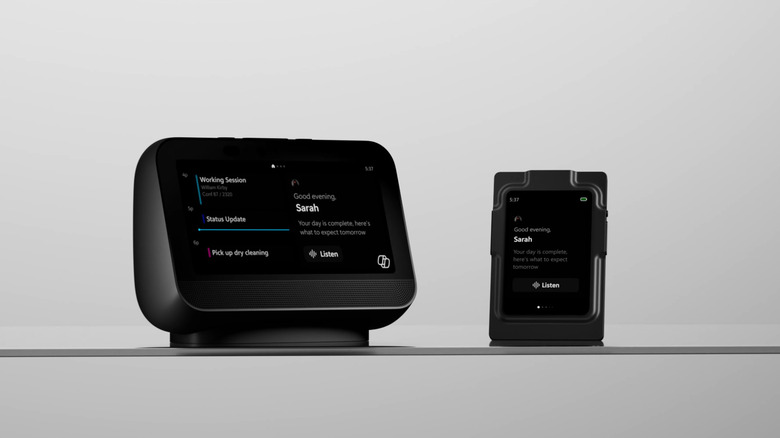
This shift essentially turns the ai wearable assistant from a passive information retriever into an active participant in the workflow. When a nurse enters a patient room, the device can automatically surface the relevant vitals update form. This contextual awareness ensures that technology assists the worker rather than distracting them from their physical environment.
Enterprise-Grade Hardware: The MDEP Advantage
Unlike previous experimental ai wearable attempts that relied on consumer-grade hardware and standard Android shells, Project Solara is built on the Microsoft Device Ecosystem Platform (MDEP). This is a specialized version of the Android Open Source Project (AOSP) hardened for enterprise security and managed via Microsoft Intune and Entra ID.
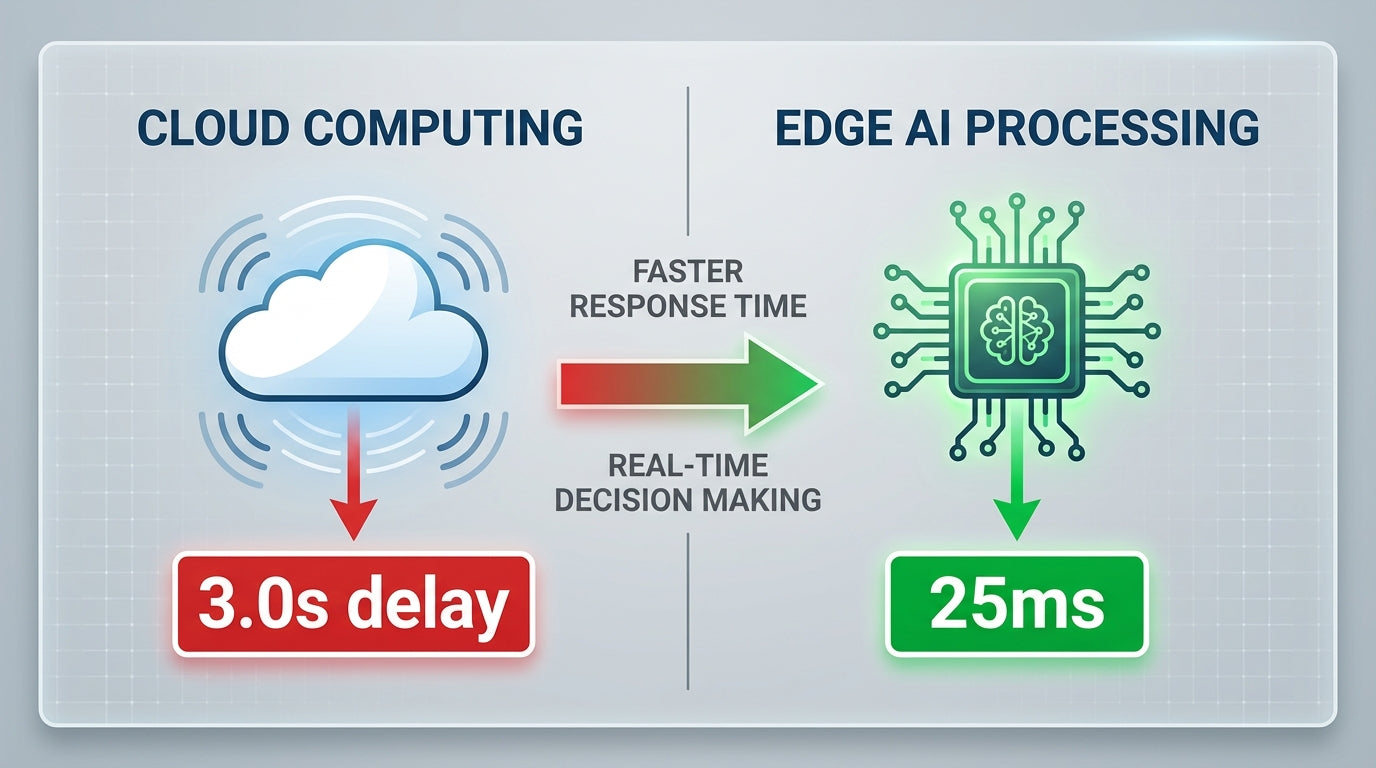
The hardware itself is a ruggedized smart badge. Microsoft revealed at the Build 2026 conference that the device is powered by a high-efficiency Qualcomm wearable chip and features a fingerprint scanner for secure biometric authentication. To ensure reliability in fast-paced environments, the device utilizes edge inference and 5G connectivity to maintain internal response times.
Key technical specifications include:
- Connectivity: 5G and Wi-Fi 7 for constant cloud-to-chip connectivity.
- Latency: Optimized for sub-25ms latency for voice interactions to ensure natural conversation.
- Sensors: A side-facing camera for computer vision tasks and high-fidelity microphones for noisy industrial environments.
- Security: SOC 2 Type 2 compliance and deep integration with the Microsoft Graph to keep organizational data grounded and secure.
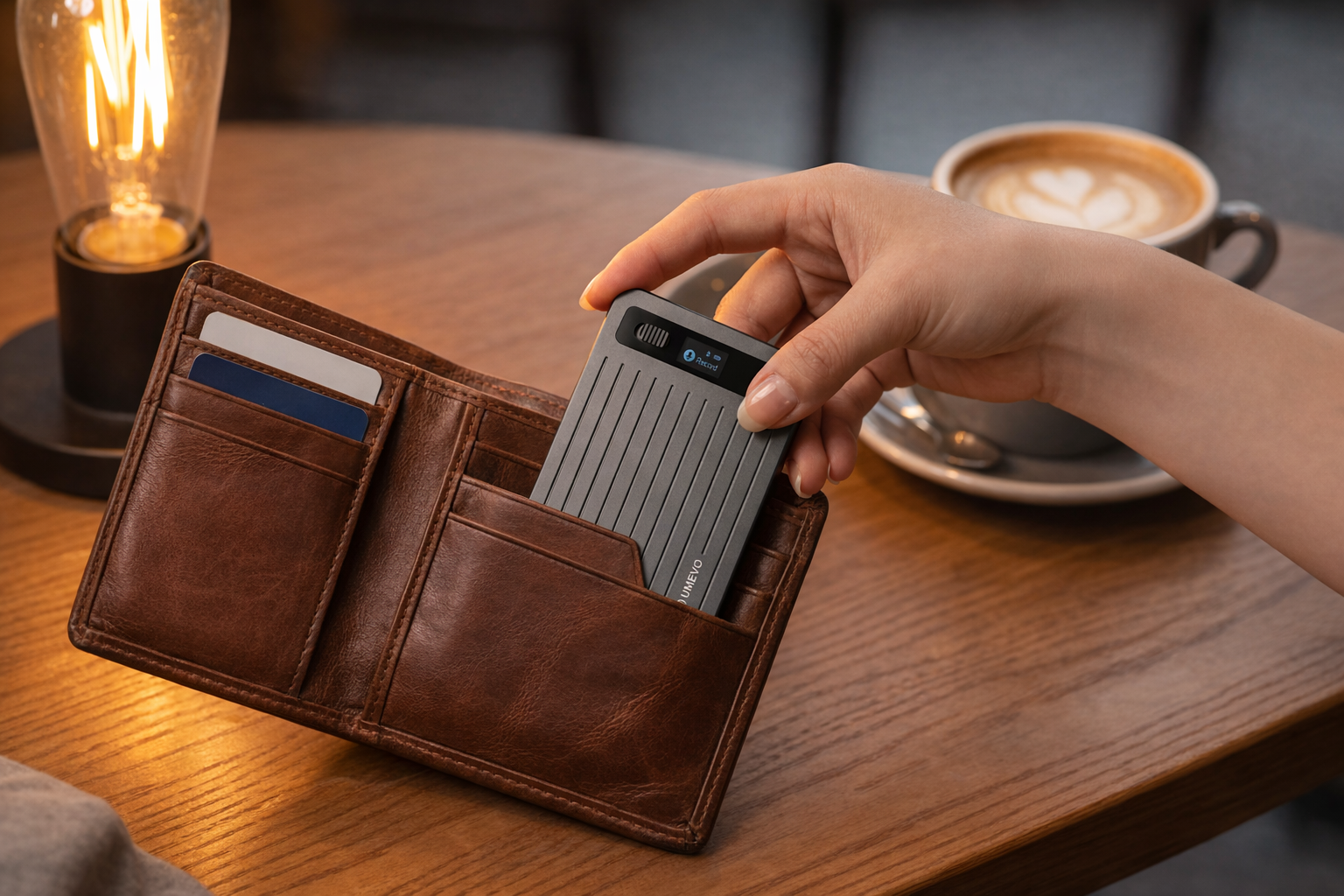
This robust foundation allows for low-latency voice ai wearables for business that don't just "chat," but perform actions. Because it connects to the Microsoft Graph, every response is grounded in real-time company data, making it the best enterprise AI wearables solution for those already invested in the Microsoft 365 ecosystem.
The Frontline Gap: Solara in Healthcare and Logistics
The true value of Project Solara is most evident in "hands-busy" environments where traditional smartphones are a hindrance. In logistics, a worker wearing the ai wearable pin for frontline workers can scan a damaged package via voice command and have the system automatically generate a replacement order while they continue sorting other items.
Microsoft has already secured major enterprise partners for the launch. Retail and healthcare giants including Target, CVS Health, and Best Buy are scheduled to begin pilot programs for Project Solara devices following its 2026 announcement. These pilots will focus on how to integrate ai wearables into company workflows to reduce time spent on administrative "paperwork" on mobile devices.
| Feature | Project Solara (Badge) | Traditional Smartwatch | Standard Smartphone |
|---|---|---|---|
| Interface | Just-in-time UI (Task-based) | App-centric (Small screen) | App-centric (Large screen) |
| Primary Interaction | Voice & Computer Vision | Touch & Limited Voice | Touch & Keyboard |
| Worker Context | High (Field/Frontline) | Moderate (Fitness/Health) | General (Office/Home) |
| Authentication | Biometric Fingerprint | PIN/Passcode | Biometric/PIN |
| Data Source | Microsoft Graph (Org-wide) | Local App Data | General Cloud/App Data |
For the healthcare sector, the wearable ai assistant for healthcare workers serves as a secondary set of eyes and ears. It can transcribe patient interactions in real-time, cross-reference symptoms with institutional databases, and alert staff to potential contraindications without the nurse ever having to step away to a workstation. This bridges the gap between digital systems and physical care, fostering true hands-free productivity.
TCO and Competitive Landscape: The 2026 Market
As we approach 2026, the market for best ai wearables is diversifying. While consumer devices like the Brilliant Labs Halo focus on lifestyle and personal assistance, Project Solara is firmly aimed at the corporate bottom line. IT decision-makers evaluating the Total Cost of Ownership (TCO) will need to weigh the hardware cost against the standard Copilot subscription costs (currently $30 per user) and the potential gains in operational efficiency.
The strategic competition is heating up, with Salesforce and its Agentforce platform also making plays for the deskless workforce. However, Microsoft’s advantage lies in its device-neutral OS strategy. By using MDEP, Microsoft isn't just selling a badge; they are selling a platform that other hardware manufacturers can adopt. This suggests we will see a wide variety of form factors—from helmets to vests—running the same Solara-based AI agents.
To ensure enterprise readiness, organizations looking at Project Solara should prioritize:
- Network Infrastructure: Ensuring 5G or robust Wi-Fi 6E/7 coverage across the facility.
- Identity Management: Updating Entra ID (formerly Azure AD) policies for wearable-based logins.
- Agent Training: Customizing Copilot agents to understand specific industrial terminology or proprietary logistics codes.
Project Solara offers a vision where the AI badge vs desk concept for office tasks becomes a reality for the warehouse floor. It solves the "last meter" problem: how to get the power of generative AI into the hands of the people who don't work at a desk.
FAQ
What is an AI wearable?
An ai wearable is a physical device—such as a badge, pin, or pair of glasses—that utilizes artificial intelligence to interact with the user and their environment. Unlike traditional electronics that rely on manual apps, these devices use voice, vision, and sensors to act as an ambient assistant that can perform tasks and provide information based on context.
How do AI wearables differ from traditional smartwatches?
While smartwatches are primarily extensions of a smartphone designed for notifications and fitness tracking, ai wearables like Project Solara are designed for autonomous intelligence. They often replace the "app grid" with a just-in-time UI and focus heavily on voice and vision sensors to assist with complex professional workflows rather than just displaying alerts.
What are the benefits of using AI in wearable technology?
The primary benefit is hands-free productivity. By using AI to process environmental data and voice commands, workers can stay focused on their physical tasks—whether that’s performing surgery or fixing a jet engine—while the assistant handles data entry, information retrieval, and system updates in the background.
What is the future of AI in the wearable tech industry?
The industry is moving toward ambient computing where the hardware becomes invisible. We expect to see a transition from specialized badges to agents embedded in everyday clothing and industrial gear. The focus will shift from "using a device" to "interacting with an agent" that lives across multiple form factors.
Do AI wearables require a monthly subscription?
Most enterprise-grade ai wearables, including Project Solara, typically require a subscription to the underlying AI service, such as Microsoft Copilot. This subscription covers the cloud processing power, security updates, and access to organizational data through the Microsoft Graph.