Quick Facts
- Tax Reality: Hyperscale facilities frequently receive 10-year, 100% property tax abatements, leaving local emergency services without new revenue to fund specialized equipment.
- Call Volume: A single Amazon facility in Ohio averaged two emergency calls per month over a four-year period, representing a significant recurring drain on local personnel.
- Fiscal Impact: A 2024 fire at an Amazon site resulted in an estimated $50 million in damages, illustrating the high-stakes nature of these industrial incidents.
- Safety Barrier: Technology companies often classify facility blueprints as trade secrets, which can prevent fire chiefs from pre-planning routes or understanding internal hazards.
- Scale of Risk: The massive energy requirements of these buildings mean a single data center fire can threaten regional grid reliability, as power usage may equal that of 100,000 homes.
- Resource Strain: Rural departments are increasingly forced to manage billion-dollar AI infrastructure using limited volunteer or small-town local municipality resources.
As AI demand surges, the growing frequency of a data center fire is exposing a hidden crisis for local municipalities. While tech giants enjoy property tax abatements, rural fire departments are struggling with an unfunded mandate to protect hyperscale architecture. From thermal runaway in lithium-ion batteries to security delays, emergency responders face unique firefighting challenges in hyperscale data centers that traditional training cannot handle.
The Fiscal Paradox: Unfunded Mandates for Local Responders
When a tech giant announces a new multi-billion dollar project in a rural township, the local community often anticipates a windfall of tax revenue. However, the reality is frequently the opposite. To attract these projects, many jurisdictions grant 100% property tax abatements. This creates a fiscal paradox: the very infrastructure that places the greatest strain on public safety funding contributes the least to the tax base required to sustain it.
The burden on local departments is not just hypothetical. A report from Loudoun County Fire and Rescue in Virginia found that emergency responses to data centers were nearly three times more likely to be fire-related than medical-related between January and October 2024. In a typical suburban environment, medical calls dominate the dispatch log. In the world of hyperscale computing, the ratio shifts toward complex electrical and fire emergencies that require far more equipment and hazardous material expertise.
For a small department, the arrival of an ai data center fire means mobilizing every available truck and technician. These rural municipality resources are often stretched to the breaking point by facilities that do not pay the taxes necessary to purchase the specialized foam or high-volume ladder trucks needed to protect them. The result is a hidden subsidy for the AI industry, paid for by the safety and response times of the local community.

Technical Hazards: Thermal Runaway and AI Rack Density
The internal environment of a modern server farm is a concentrated landscape of hazards. The move toward advanced AI applications has led to increased AI rack density, where hundreds of high-performance servers are packed into tight configurations. This density generates immense heat, requiring complex cooling systems that, if compromised, can lead to a rapid escalation of fire.
At the heart of the power system lies the uninterruptible power supply, which relies on massive lithium-ion battery banks. The primary concern with these systems is thermal runaway. This is a chemical chain reaction where a battery cell heats up uncontrollably, igniting neighboring cells and releasing toxic gases. Once thermal runaway begins, it is notoriously difficult to extinguish with water, often requiring thousands of gallons or specialized extinguishing agents like Novec 1230 to achieve total flooding suppression.
| Feature | Standard Industrial Fire | Hyperscale Data Center Fire |
|---|---|---|
| Primary Risk | Combustible stock/packaging | Thermal runaway and electrical loads |
| Extinguishing Agent | Water/Standard Sprinklers | Specialized extinguishing agents (Clean Agents) |
| Facility Access | Publicly accessible blueprints | Trade secret status/Restricted blueprints |
| Ventilation | Natural or mechanical smoke fans | Airtight containment/Hot-aisle configurations |
| Duration | Hours | Can exceed 30+ hours (e.g., Jerome Township) |
Data center fire safety standards, such as NFPA 75 and 76, provide guidelines for protection, but the rapid evolution of liquid cooling and higher voltages can outpace traditional code enforcement. A data center fire hazard assessment must now account for energized electrical equipment that cannot simply be "turned off" without risking regional grid strain or data loss.
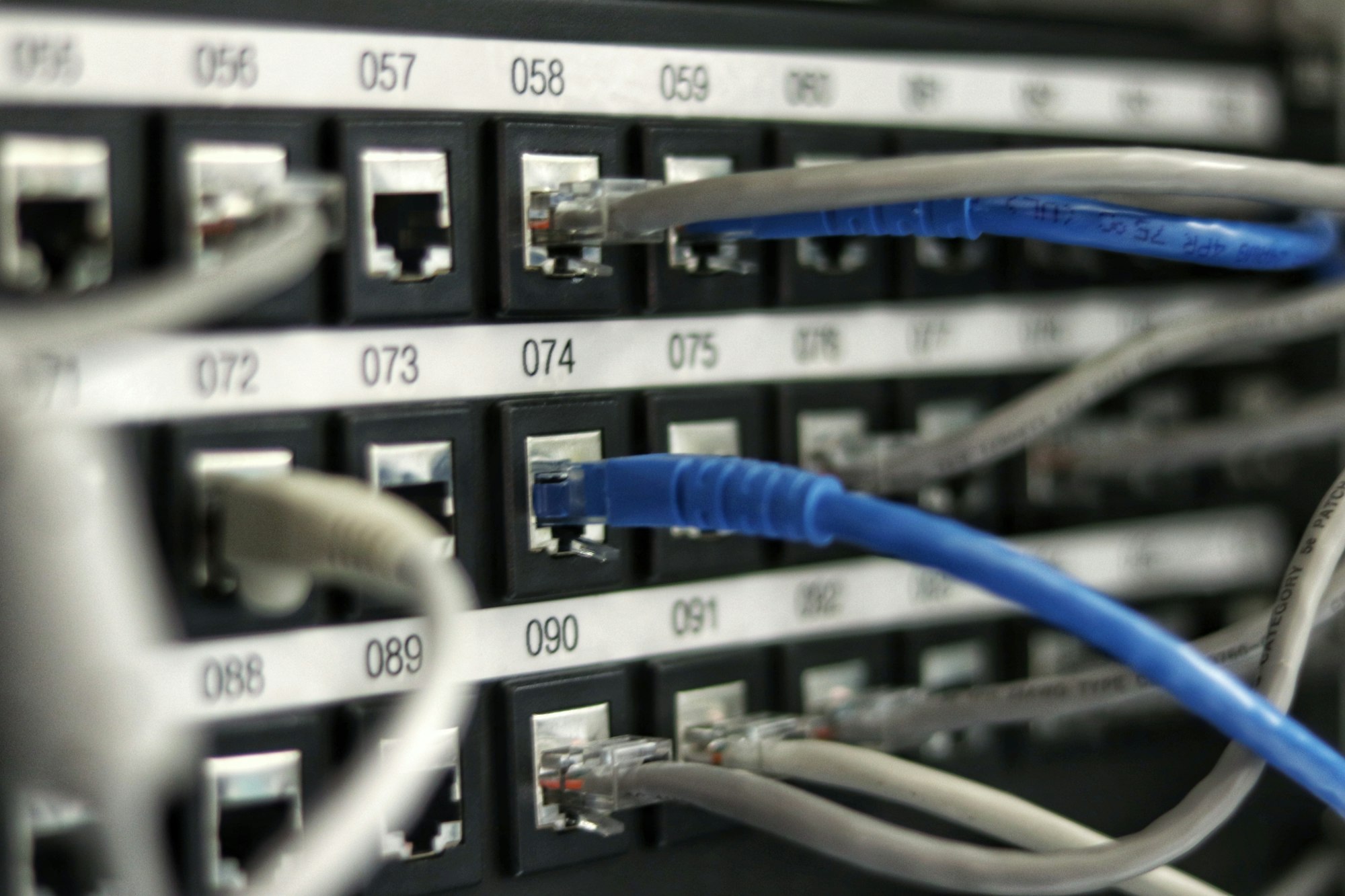
Standard cable insulation and plastic components add fuel to the fire, producing dense, acrid smoke that complicates visibility. Firefighters must navigate windowless, sprawling structures where the sheer volume of electronic equipment creates a labyrinth of obstacles.

The 'Black Box' Barrier: Security vs. First Responder Speed
One of the most frustrating firefighting challenges in hyperscale data centers is the conflict between corporate security and operational speed. These facilities are designed as high-security fortresses to protect user data and proprietary hardware. However, those same security measures—thick concrete walls, biometric gates, and windowless designs—can turn a burning building into a black box for rescuers.
In Jerome Township, Ohio, the local fire department responded to 84 emergency calls at two Amazon data center facilities over a four-year period. During these incidents, responders often faced significant security clearance delays at the gates. In some cases, firefighting teams waited for long periods just to gain basic entry, while a small electrical fault inside had time to expand into a major event.
Furthermore, many companies invoke trade secret laws to withhold facility blueprints from local fire chiefs. Without these maps, first responder mobilization is stalled as crews enter a facility essentially blind. The lack of pre-planning for emergency response plans for data centers means that crews do not know the location of high-voltage lines, battery rooms, or emergency shutdowns. When a 2024 fire at an Amazon data center in Ohio resulted in an estimated $50 million in damages, the fire burned for over 24 hours partly because crews had to fight through these layers of physical and bureaucratic resistance.

Case Study: Regional Impact and Cascading Failures
The consequences of a data center fire often ripple through the entire region, far beyond the walls of the server room. A prime example occurred during the northc data center fire in the Netherlands. The incident in the Groningen area triggered high-level emergency protocols, known as GRIP1, which are reserved for events with significant social impact.
During this netherlands data center fire, authorities issued massive NL-Alerts to the public, warning of toxic smoke and advising residents to close all windows and stay indoors. The amsterdam data center fire context highlights how these facilities are often located near critical infrastructure. In the NorthC incident, the fire didn't just burn hardware; it disrupted services for Utrecht University and various transit systems, proving that a physical fire in one location can cause a digital blackout for an entire province.
The recovery from such an event is rarely quick. Even after the flames are out, the release of hazardous substances and soot can corrode sensitive electronics throughout the building. Managing the aftermath involves extensive air quality monitoring and a multi-day effort to restore grid reliability. For the local community, the risk isn't just the fire itself, but the potential for regional grid strain as the facility attempts to draw massive amounts of power to reboot its systems after a 72-hour outage.

FAQ
Are data centers a fire risk?
Yes, data centers present specialized fire risks due to the concentration of high-voltage electrical equipment and lithium-ion battery systems. While built with robust suppression systems, the high energy density means that if a fire does start, it can rapidly progress to thermal runaway, which is difficult for traditional fire departments to extinguish.
Why are people suddenly against data centers?
Opposition is often driven by the hidden costs these facilities impose on local communities. Residents are concerned about property tax abatements that leave local services underfunded, the massive water consumption required for cooling, and the strain that data center power needs place on the local electrical grid.
What happens when a data center gets burned?
The immediate effect is a localized service outage, but the impact can cascade to regional websites, transit systems, and universities. Beyond digital loss, the physical fire often releases toxic smoke from burning plastics and chemicals, requiring environmental monitoring and long-term decontamination of the technical facility.
Which data Centre burned down?
Several high-profile incidents have occurred recently, including a significant fire at an OVHcloud facility in Strasbourg, France, and a NorthC facility fire in the Netherlands. In the United States, an Amazon data center fire in Ohio recently caused $50 million in damage and required a 30-hour emergency response.
Is IT harmful to live near a data center?
Living near a data center typically does not pose an immediate health risk, but residents may experience noise pollution from massive cooling fans and increased traffic during construction. The primary concern for nearby residents is the potential for toxic smoke plumes and the strain on local utilities and emergency services during a catastrophic fire event.