Quick Facts
- Original Name: Laboratorium Wennebostel (often abbreviated as Labor W)
- Founder: Dr. Fritz Sennheiser, established in June 1945
- Name Change Year: 1958, transitioning to Sennheiser electronic to build a global brand identity
- Operational Shift: Evolved from an OEM laboratory for measuring tools to a premier manufacturer of high-fidelity audio equipment
- Engineering Milestone: Released the HD 414 in 1968, the world's first open-back headphones
- Current Corporate Structure: Consumer division licensed to Sonova (2022); Professional division remains family-owned
- Revenue Benchmark: Reported 527.2 million euros in revenue from professional audio in the 2023 fiscal year
Sennheiser was founded as Laboratorium Wennebostel in 1945 and changed its name in 1958 to establish a global brand identity around the founder's surname as it transitioned from an OEM laboratory to a premier manufacturer of high-fidelity sennheiser headphones. This strategic rebranding allowed the company to move beyond its scientific roots in a German farmhouse and become a household name synonymous with acoustic precision and professional-grade engineering.

The Birth of Labor W: Engineering in a Farmhouse
To understand why the name change was necessary, we have to look back at the post-war landscape of 1945. The history of Laboratorium Wennebostel name change begins not in a corporate boardroom, but in a rural farmhouse in Wennebostel, Germany. Dr. Fritz Sennheiser, a radio frequency engineer, gathered a small group of seven researchers to start a new venture following the destruction of the Institute for Radio Frequency Engineering and Electroacoustics.
In the beginning, the company wasn't focused on music. They were repairing measuring instruments and building voltmeters. The name Laboratorium Wennebostel was a literal description of what they were: a laboratory located in the village of Wennebostel. This sterile, scientific identity suited their early role as an original equipment manufacturer (OEM). If you were a technician in the late 1940s, Labor W was a mark of technical competence, but it lacked the resonance required for a global consumer audience.
The company's expansion was rapid. By 1955, just ten years after its founding, the original laboratory had grew from that small team of seven to approximately 250 employees. This growth was fueled by their diversification into professional audio equipment, including the MD 1 and MD 2 microphones. This period of German engineering and audio heritage laid the foundation for the transducer technology that would eventually define sennheiser headphones around the world.
1958: Why Laboratorium Wennebostel Became Sennheiser
By the late 1950s, Fritz Sennheiser realized that the name Laboratorium Wennebostel was a mouthful for international markets and didn't convey the personal craftsmanship behind the products. In 1958, the company was officially renamed Sennheiser electronic. This wasn't just a marketing exercise; it was a total brand transformation that signaled the company’s intention to market products under its own label rather than simply acting as a technical supplier for others.
The surname Sennheiser itself carries a quiet connection to the company's rural beginnings. Linguistically, the word Senne refers to a mountain dairy farm. Historically, a Senn was a worker at such a location. While the company was moving into high-fidelity audio, its roots remained firmly planted in the Wennebostel farmhouse, which still serves as part of the company's headquarters today.
Changing the name gave the brand a human face. It followed the tradition of other legendary European engineering firms like Zeiss or Bosch, where a family name becomes a seal of quality. This rebranding was the catalyst for the company to stop thinking like a local laboratory and start thinking like a global audio authority. It paved the way for the development of sennheiser headphones that would soon dominate both living rooms and recording studios.
Defining the Sound: The Open-Back Revolution and HD Series
If the 1958 name change provided the identity, the 1968 introduction of the HD 414 provided the soul. Before this point, headphones were bulky, closed-off affairs using heavy pads that isolated the listener but often resulted in a "boxy" sound. Sennheiser’s engineers discovered that by opening the back of the earcups and using lightweight foam, they could create a more natural, airy soundstage.
This innovation defined the sennheiser headphones hd line for decades to come. The HD 414 became a massive success, selling over 10 million units and proving that the world was hungry for high-fidelity audio that felt transparent rather than claustrophobic. This commitment to an open-back design reached its zenith during the late 20th century, cementing the brand's reputation for studio reference quality.
| Model | Launch Year | Key Feature | Significance |
|---|---|---|---|
| HD 414 | 1968 | World's first open-back design | Revolutionized comfortable hi-fi listening |
| HD 600 | 1997 | Neutral, natural sound balance | Remained a studio benchmark for over 25 years |
| HD 800 | 2009 | Ring Radiator transducer | Set the standard for imaging and soundstage |
Among these, the sennheiser hd 600 headphones deserve special mention. For audiophiles, the HD 600 represents the gold standard of professional monitoring. Its ability to provide an uncolored, accurate representation of a recording is why it remains a staple in studios today. It doesn't rely on artificial bass boosts; instead, it focuses on tonal balance, allowing engineers to hear exactly what is happening in the mix.
Peak Performance: HE-90 Orpheus and the Audiophile Standard
In 1991, the company set out to answer a simple question: What if we built the best headphones in the world, regardless of cost? The result was the Sennheiser HE-90 Orpheus history and legacy. This electrostatic system, complete with its own vacuum tube amplifier and a key to turn it on, became a "halo product" that defined the brand's engineering prestige.
While few could afford the Orpheus, the technology developed for such high-end projects eventually trickled down. You can see this in the sennheiser hd 800 s headphones, which utilize a 56mm Ring Radiator transducer. This unique driver design minimizes the unwanted vibrations that occur in traditional dome-shaped drivers, resulting in a level of clarity and soundstage width that few other sennheiser headphones wired models can match.
The Sennheiser sound philosophy is built on neutrality. Whether you are using a mid-range pair for home listening or a flagship system, the goal is always to reproduce the sound exactly as it was captured. This focus on German engineering ensures that the equipment never gets in the way of the music, a philosophy that has made them the No. 1 choice for critical listeners.
Modern Era: Wireless Connectivity and the Sonova Partnership
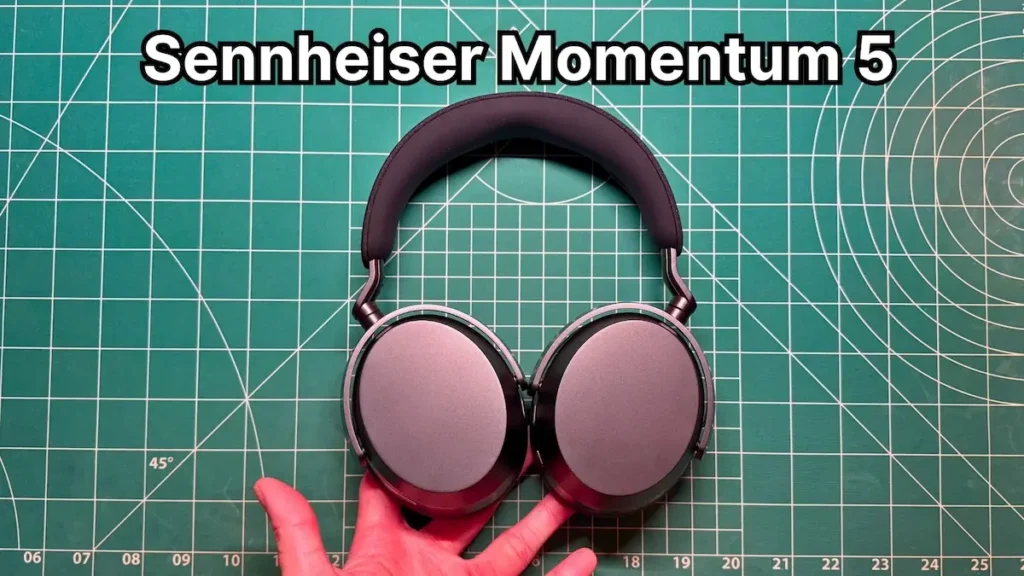
The 21st century brought new challenges as the world moved toward portable, cable-free listening. Sennheiser responded by launching the Momentum series in 2012, targeting lifestyle users who wanted the company's trademark sound but in a mobile-friendly package. These sennheiser headphones wireless models introduced Active Noise Cancellation and premium materials like leather and stainless steel into the lineup.
One of the most significant shifts in the company's history occurred in 2022. Sennheiser decided to refocus entirely on its professional audio business. As part of this strategy, the consumer division was sold to Sonova Holding AG, a world leader in hearing solutions. This partnership means that sennheiser headphones like the sennheiser momentum 4 wireless headphones are now developed by Sonova under a long-term license agreement.
This transition has allowed for a faster pace of innovation in the consumer space. Modern users can now enjoy a mix of traditional acoustic expertise and cutting-edge digital features:
- Momentum Series: These offer best-in-class battery life and competitive noise cancellation while retaining the brand’s refined frequency response.
- Accentum Line: A more accessible entry point for those wanting the Sennheiser sound signature without the premium price tag of the flagship Momentum models.
- HD 560S: A bridge between the professional and consumer worlds, offering a reference-grade experience for home listeners in an affordable package.
The corporate evolution continues. In its 2023 fiscal year, the Sennheiser Group reported strong revenues from its professional sector, which includes microphones, meeting room technology, and the renowned Neumann studio brand. This separation has allowed the Sennheiser name to thrive in two distinct worlds: the specialized recording studio and the everyday commute.
Conclusion: A Legacy of Sound
From the cramped rooms of a Wennebostel farmhouse to the world's most prestigious concert halls, the Sennheiser journey is a testament to the power of precise engineering. The name change in 1958 was more than just a new coat of paint; it was a commitment to the person behind the technology and a promise to the listener.
Whether you are looking for sennheiser headphones wired for a pure, analog experience or the latest sennheiser headphones wireless for on-the-go convenience, you are interacting with over 75 years of acoustic DNA. The company has managed to maintain its reputation for accuracy and reliability through corporate shifts and technological revolutions, ensuring that the Sennheiser name remains a benchmark for quality audio for generations to come.

FAQ
Are Sennheiser headphones good quality?
Sennheiser is globally recognized for exceptional build quality and acoustic precision. Their products are designed with German engineering standards, focusing on longevity and repairability. Many of their classic studio models, like the HD 600, are built to last for decades, with user-replaceable parts like cables and earpads readily available.
Which Sennheiser headphone is the best?
The answer depends on your use case. For professional mixing and critical listening, the HD 800 S is widely considered the best for its immense soundstage and detail. For casual wireless use with noise cancellation, the Momentum 4 Wireless is the current flagship. For those seeking the best value in a neutral, open-back headphone, the HD 560S is highly recommended by audiophiles.
Are Sennheiser headphones really that good?
Yes, particularly if you value a natural and accurate sound signature. Unlike many mass-market brands that heavily boost bass and treble, Sennheiser focuses on a "flat" or "balanced" response. This makes them ideal for professionals and hobbyists who want to hear music exactly as the artist intended, without artificial coloration.
What is better, Bose or Sennheiser?
This is a matter of priority. Bose typically leads in active noise cancellation (ANC) performance and compact, travel-friendly designs. Sennheiser generally wins on sound quality, offering a more nuanced and high-fidelity listening experience. If you want a "sanitized" quiet environment for a flight, Bose is excellent; if you want the best possible sound during that flight, Sennheiser is usually the better choice.
Which is the No. 1 headphone brand?
While "No. 1" is subjective and can be measured by sales or critical acclaim, Sennheiser is consistently ranked as one of the top brands in the world for professional studio monitoring and high-end audiophile gear. In the consumer market, it sits alongside Sony and Apple (AirPods) as a premium tier manufacturer, though it is often the preferred choice for those who prioritize sound reproduction over ecosystem features.