[Timeline: 2024 — Law Signed] ➔ [2025-2026 — Study & Coordination Phase] ➔ [Nov 2027 — Moratorium Expiration]
Quick Facts
- Legislation: Maine bill LD 307 establishes the first statewide data center moratorium in the country.
- Effective Dates: The pause on new permit approvals remains in effect until November 1, 2027.
- Power Threshold: The ban specifically targets large-scale facilities requiring 20 megawatts (MW) of power or more.
- Oversight Body: The law creates a 14-member Data Center Coordination Council to study long-term impacts.
- Primary Concerns: Legislators cite risks to grid reliability, water consumption, and residential electricity price inflation.
- National Context: Maine is the first state in the United States to pass a statewide moratorium on large-scale development.
Maine has officially enacted a historic data center moratorium through November 2027. Under bill LD 307, the state will pause permits for large-scale facilities to protect its power grid and ratepayers. This data center ban targets projects exceeding 20 megawatts, allowing for a comprehensive study of their impact on energy load growth and water consumption.

Understanding LD 307: The 20MW Power Threshold
When we talk about digital infrastructure, it is easy to get lost in the clouds—quite literally. But for Maine, the reality of the data center moratorium is grounded in very specific physical numbers. The centerpiece of bill LD 307 is the 20 megawatt threshold. To put that into a perspective you can feel in your own home, 20MW is roughly the amount of electricity required to power 20,000 households.
This isn't a total ban on technology. Small-scale server rooms or local tech hubs can still move forward. Instead, the law targets hyperscale developments—the massive warehouses filled with thousands of servers that process everything from your social media feed to the latest artificial intelligence algorithms. By setting this limit, the state is effectively putting a "keep out" sign on projects that would consume massive amounts of resources while the state figures out its next move.
The suspension of state and municipal permit issuance means that for the next three years, no town council or state environmental board can green-light a project that crosses this power line. It is a legislative pause designed to prevent a gold rush of development that could outpace the state’s ability to manage it. This specific focus on Maine LD 307 data center requirements ensures that the state isn't just reacting to fear, but rather managing a very real data center power threshold Maine ban that protects the local public utility commission from being overwhelmed by complex applications.
Key Terms Megawatt (MW): A unit of power equal to one million watts. For context, 1MW can power approximately 750 to 1,000 homes. BETE (Business Equipment Tax Exemption): A Maine program that often allows large corporations to avoid paying local taxes on expensive machinery, a point of significant data center controversy.
Why Maine? Grid Reliability and the 2026 Energy Crisis
If you live in Maine, you already know that your monthly utility bill is among the highest in the country. This existing financial pressure on families is the primary engine driving the data center moratorium. Maine’s electrical grid has a total capacity of roughly 5,500MW. While that sounds like a lot, the system is aging, and the margin for error is shrinking.
Legislators became increasingly worried about energy load growth. If a handful of hyperscale facilities were allowed to plug in simultaneously, they could consume a massive percentage of the state's available power. Because Maine is part of the ISO-New England grid, any sudden spike in demand doesn't just stay local; it affects the entire region's energy prices. The fear is a phenomenon called electricity price inflation, where the cost of upgrading the grid to accommodate these private giants is passed directly down to you—the residential ratepayer.
The data center concerns aren't just about the wires and poles. There is a deep-seated need for ratepayer protection. By slowing down, the state is asking a critical question: should local residents subsidize the infrastructure needed for global tech giants? The moratorium gives the state breathing room to ensure that future developments do not compromise utility reliability or leave you with a bill you can’t afford to pay.
Impacted Projects: From Paper Mills to Waterless Cooling
To understand why this law was fast-tracked, we have to look at the projects that were already knocking on Maine’s door. For decades, Maine’s economy was built on paper mills—monstrous industrial sites that already have high-voltage power lines and access to water. As these mills closed, they became the perfect "zombie" sites for data center developers.
Take the Jay Paper Mill site, for example. Developers had proposed an 82MW data center facility there. Under the new law, this project is now halted because it far exceeds the 20MW limit. Similarly, a massive project in Sanford, known as the multiFUELS development, was eyeing a draw of 100MW to 200MW. Without the moratorium, these projects could have moved forward with very little oversight regarding their long-term impact on the community.

However, not all tech is created equal. I like to use the "Prius vs. Humvee" metaphor here. Some data centers are legacy server farms that guzzle electricity and millions of gallons of water for cooling. Others, like LiquidCool Solutions in Limestone, use innovative waterless cooling technology. These "Prius" models of the tech world represent a more sustainable path forward. One of the grid capacity concerns for data center developers is that the moratorium doesn't currently distinguish between a water-guzzling giant and a high-efficiency green facility. This distinction will likely be a major topic for the new council to tackle.
The Roadmap to 2027: The Data Center Coordination Council
The state isn't just sitting idle until November 1, 2027. The law establishes a 14-member Data Center Coordination Council. This group is a mix of energy experts, environmental advocates, and economic development officials. Their Maine Data Center Coordination Council mandate is to conduct a deep-dive environmental impact study and a financial audit of the industry's presence in the state.
Their work involves several key milestones:
- Grid Mapping: Determining exactly where the grid can handle new loads without triggering expensive upgrades.
- Tax Policy Reform: Evaluating whether data centers should remain eligible for the BETE tax exemption, which currently saves large corporations millions while shifting the tax burden to local homeowners.
- Water Protection: Setting strict limits on water consumption to ensure that cooling these servers doesn't drain local aquifers.
By February 1, 2027, the council must deliver a final strategy to the legislature. This roadmap will likely define the next decade of Maine’s digital economy, moving us away from a "Wild West" approach to a model of regulatory oversight that prioritizes the public good over corporate speed.

A Growing National Trend: Maine as the Canary in the Coal Mine
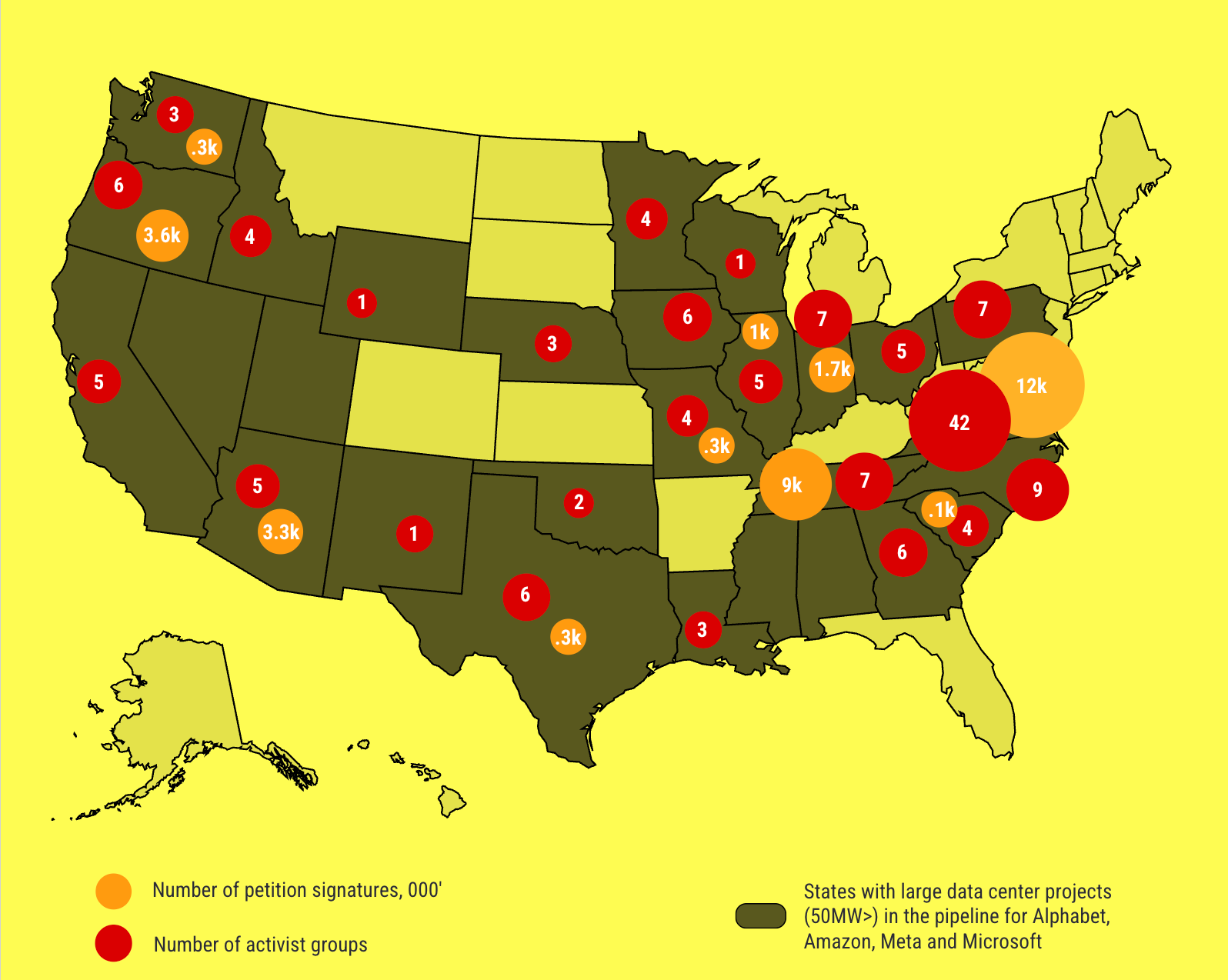
While Maine is the first to implement a statewide pause, it is far from alone. Across the country, states are hitting the brakes as the AI boom clashes with aging power infrastructure. There are currently billions of dollars in blocked or delayed projects nationwide as local governments realize their grids simply cannot handle the load.
| State | Proposed Legislation / Action | Focus of the Pause |
|---|---|---|
| Georgia | HB 1012 | Suspending tax breaks for data centers to protect the grid |
| Michigan | Legislative Inquiry | Investigating water usage and energy-constrained regions |
| New Hampshire | 2026 Policy Review | Aligning data center growth with regional power supply |
| Minnesota | Environmental Petitions | Assessing the impact of massive cooling systems on local water |
This national trend highlights a significant shift in how we view digital infrastructure. For years, data centers were seen as a "clean" way to bring jobs to a town. But as the scale has grown from small server rooms to 800MW hyperscale campuses, the conversation has shifted toward data center controversy. Maine is acting as the "canary in the coal mine," signaling to the rest of the country that the price of unlimited digital growth might be too high for the average citizen to bear.
FAQ
What is a moratorium on data centers?
A moratorium is a temporary legal pause on the approval and construction of new facilities. In Maine, this means that state and local authorities cannot issue permits for any data center project that requires 20MW or more of electricity until the state completes a comprehensive study of the industry's impact on the power grid and environment.
What state is banning new data centers?
Maine is currently the only state with a statewide data center ban on large-scale projects through 2027. However, other states like Georgia and Virginia are considering similar legislative pauses or are tightening regulations to manage the massive energy demands of the industry.
Why are people protesting against data centers?
Most protests and data center controversy stem from concerns about rising electricity bills and environmental destruction. Residents are often worried that massive server farms will consume local water supplies for cooling and force the utility company to raise rates on homeowners to pay for necessary power grid upgrades.

Are data centers being stopped?
They aren't being stopped permanently, but they are being slowed down. The goal of the legislative pause is not to kill the tech industry, but to ensure it grows in a way that doesn't cause a blackout or a financial crisis for local residents. It is a transition from unregulated expansion to a more sustainable, planned development model.
Why do states not want data centers?
It isn't that states don't want the technology; they are wary of the resource cost. A single large data center can use as much water as a small city and as much power as tens of thousands of homes, while providing relatively few permanent jobs compared to traditional manufacturing. States are now weighing these costs against the perceived economic benefits.