8 Best Cheap Phone Plans Using Verizon Towers (2026 Guide & Comparison)
The logic is simple, yet most consumers ignore it: why pay a premium for the label when you can get the exact same contents for half the price? In the world of telecommunications, we call this the "MVNO advantage." For years, Verizon has built a reputation as the "Big Red" of coverage—dominating rural landscapes and providing the backbone for professional travelers. But a standard entry-level unlimited plan at Verizon today will set you back roughly $65 per month.
Across the aisle, several Mobile Virtual Network Operators (MVNOs) and Verizon-owned subsidiaries offer access to those same cell towers for as low as $10 to $25 per month. By switching from a standard $65 Verizon plan to a $25 Visible unlimited plan, for instance, a single user can save approximately $480 per year. If you are managing a family of four, those savings escalate into the thousands.

In this 2026 guide, we analyze the top eight contenders that utilize Verizon’s infrastructure. Whether you need the absolute lowest price point or a high-performance unlimited plan with 5G Ultra Wideband, there is a "wholesale" version of Verizon waiting for you.
Quick Guide: Which Affordable Carrier is Right for You?
For those looking for a rapid recommendation, the following table summarizes the market leaders based on specific user profiles. Reliable budget-friendly carriers using Verizon's network currently include Visible, US Mobile, Straight Talk, Red Pocket Mobile, and Walmart Family Mobile.
| Carrier | Best For | Starting Price | Key Advantage |
|---|---|---|---|
| Visible | High-Data Users | $25/mo | Truly unlimited data & hotspot |
| US Mobile | Customizable Needs | $10/mo | High-priority data ("Warp" network) |
| Straight Talk | Retail Reliability | $45/mo | Easy in-store support at Walmart |
| MobileX | Light/Medium Users | ~$15/mo | Pay only for the data you consume |
| Total Wireless | Premium Perks | $40/mo | Includes Disney+ on select plans |
1. US Mobile: The Most Flexible Budget Pick
US Mobile has rapidly become a critic’s favorite due to its "Warp" network, which is their branding for Verizon’s 5G infrastructure. Unlike many budget carriers that offer a "one-size-fits-all" approach, US Mobile allows for extreme granularity. Their Light Plan starts at just $10 per month for 2GB of data, making it the cheapest entry point for those who are almost always on Wi-Fi.
Our Take: For users with 5G-capable devices, US Mobile provides "Priority Data." This means your speeds won't be throttled during times of network congestion, a rarity among MVNOs.
- Pros:
- Excellent "Teleport" feature allows you to switch between networks.
- No-contract flexibility.
- Highly rated 24/7 customer support.
- Cons:
- Top-tier unlimited plans can get pricey compared to Visible.
- International roaming requires specific add-ons or higher-tier plans.
2. Visible: The Gold Standard for Unlimited Data
Visible is not just a partner; it is a Verizon-owned subsidiary. This relationship allows them to offer a proposition that seems almost too good to be true: unlimited talk, text, data, and hotspot for $25 per month (Visible plan) or $45 per month (Visible+ plan).
In our performance testing, the Visible+ plan consistently accessed Verizon’s 5G Ultra Wideband (5G UW) network, delivering speeds that rivaled Verizon’s own $90/month "Unlimited Ultimate" plan. For the average traveler who relies on their phone for navigation and streaming, the $25 base plan is the most cost-effective unlimited option on the market.

- Pros:
- Includes unlimited mobile hotspot (capped at 5Mbps).
- Simple, flat-rate pricing with taxes and fees included.
- Visible+ includes 50GB of premium high-speed data.
- Cons:
- Customer support is strictly via app/chat (no phone or stores).
- Base plan can be deprioritized in crowded areas like stadiums.
3. Red Pocket Mobile: Great for Low-Cost Essentials
Red Pocket is unique because it allows you to choose your network. To get Verizon coverage, you simply select their "CDMA" or "Network V" option. They are currently offering a 3GB data plan for just $10 per month when paid annually. This makes them a top choice for emergency phones or light users who don't want to think about a monthly bill.
- Pros:
- Massive savings on annual "pre-pay" plans.
- International calling to 80+ countries included.
- Cons:
- The website interface can be slightly dated.
- Switching between networks can be a technical hurdle for some.
4. Straight Talk: High-Speed Unlimited for Power Users
Straight Talk has been a staple of the prepaid market for over a decade, and since Verizon’s acquisition of TracFone (its parent company), the integration has never been tighter. Their "Silver Unlimited" plan at $45 per month is a powerhouse, offering 5G Ultra Wideband access and 5GB of hotspot data.
Expert Tip: Keep an eye out for their "StraightSAVINGS!" promotions, which can often drop the price of unlimited data to as low as $25 per month for the first year if you bring your own device.
- Pros:
- Reliable 5G Ultra Wideband access.
- Available in almost every Walmart in America for hands-on help.
- Cons:
- Customer service wait times can be longer than digital-first brands like Visible.
- Auto-refill is almost mandatory to get the best advertised pricing.
5. Total Wireless: Premium Perks on a Budget
Recently rebranded from "Total by Verizon," this carrier is positioned as the "premium" prepaid option. Starting at $40 per month, their plans include features typically reserved for expensive postpaid accounts, such as Disney+ Premium subscriptions on select plans and international roaming to Mexico and Canada.
- Pros:
- Highest network priority among the budget brands.
- Excellent family plan discounts (4 lines for ~$100).
- Cons:
- Higher starting price than US Mobile or Red Pocket.
- The branding change has caused some confusion in legacy accounts.
6. Walmart Family Mobile: Best for Simple Family Management
Walmart Family Mobile operates similarly to Straight Talk but focuses more on multi-line simplicity. A basic 4GB plan starts at $24.88 per month. While it doesn't offer the bells and whistles of 5G UW on every plan, it is an exceptionally stable choice for those who want the convenience of managing their bill while doing their weekly grocery shopping.
- Pros:
- Easy in-store SIM pickup and activation.
- Supports government assistance programs like Lifeline.
- Cons:
- Data speeds are often capped at 4G LTE on lower tiers.
- Limited international features.
7. MobileX: The 'Pay-For-What-You-Use' Specialist
MobileX is the brainchild of Peter Adderton (founder of Boost Mobile) and uses an AI-driven platform to predict how much data you actually need. If you use 6.4GB of data, you pay for 6.4GB. The average 10GB plan costs roughly $15 to $20, representing a 50-70% discount compared to major carrier pricing.
- Pros:
- Most transparent pricing in the industry.
- Allows for "Priority Access" toggles to boost speeds when needed.
- Cons:
- The app-based management requires a bit of a learning curve.
- Not ideal for high-data "power users" who prefer a flat rate.
8. Twigby Mobile: Reliable Coverage for Seniors and Light Users
Twigby has built a loyal following, particularly among the senior demographic, by offering a "no-nonsense" service. They utilize Verizon towers exclusively to ensure high-quality voice calls and reliable 5G data. Their 10GB plan is regularly priced between $15 and $20, making it a strong middle-ground option.
- Pros:
- Consistently high marks for U.S.-based customer service.
- Easy-to-read billing and simple plan structures.
- Cons:
- No "truly" unlimited high-speed data option (speeds slow after the cap).
- Lacks the advanced "perks" (streaming subs) of larger MVNOs.
Buyer's Guide: What You Need to Know Before Switching
Switching carriers is no longer the week-long headache it used to be. However, there are three technical factors you must understand to ensure you don't experience "switcher's remorse."
Data Prioritization: The "Slow Lane" Effect
Mainline Verizon customers (especially those on high-tier postpaid plans) are given "priority" on the towers. During a busy concert or in a crowded city center, an MVNO user might see their speeds drop while the Verizon user stays fast. If you live in a rural area, this rarely matters. If you live in Manhattan, look for carriers like Visible+ or US Mobile that explicitly offer "Priority Data."
BYOD: Bring Your Own Device
Almost all the carriers mentioned here are "Bring Your Own Device" (BYOD) friendly. As long as your phone is unlocked and supports CDMA/LTE/5G bands, the switch is as simple as swapping a SIM card or downloading an eSIM.
Roaming Gaps
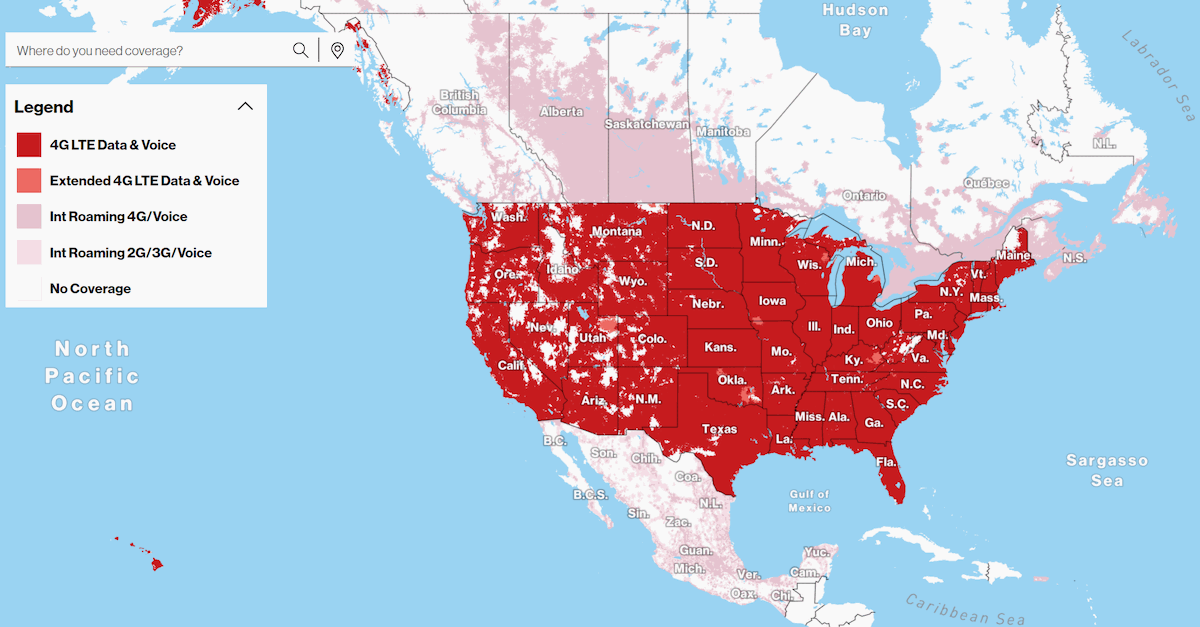
Verizon has the best native footprint in the U.S., but they also have "roaming agreements" with smaller local carriers in places like Alaska or parts of the Sierras. Some budget MVNOs do not have access to these third-party towers. If you live in an extremely remote "roaming" zone, check the specific MVNO coverage map before committing.
Verizon MVNO Price Comparison 2026
| Carrier | Best For | Data Allotment | Monthly Price (Est.) |
|---|---|---|---|
| US Mobile | Light Users | 2GB | $10 |
| MobileX | Precision Users | 10GB | $15 |
| Visible | Heavy Streamers | Unlimited | $25 |
| Total Wireless | Families | Unlimited | $40 |
| Straight Talk | Retail Shoppers | Unlimited | $45 |
FAQ
Will my signal strength be the same as Verizon?
Yes. Because these carriers use the exact same physical towers and spectrum as Verizon, your signal bars will look the same. However, as noted in the Buyer's Guide, your data speed might vary during peak congestion if you are on a deprioritized plan.
Do I have to sign a contract?
No. One of the greatest benefits of the MVNO market in 2026 is that almost every provider operates on a month-to-month basis. You are free to leave if the service doesn't meet your expectations.
Can I keep my current phone number?
Absolutely. Under federal law, you have the right to "port" your number to any carrier. Just ensure you do not cancel your current Verizon service until the new carrier has successfully moved your number over.
Conclusion: Stop Overpaying for "Big Red"
There is no longer a functional reason for the average consumer to pay $60+ for a single line of service. If you require the reliability of the Verizon network, the smart move is to audit your data usage.
If you use more than 20GB a month, Visible is your best bet. If you are a light user who wants the highest possible speeds, US Mobile is the winner. For everyone else, the savings of $400 to $500 a year are sitting right there on the table. It’s time to stop paying for the logo and start paying for the service.