Our Top Picks
Weird android phones like the Samsung Galaxy Beam and LG Wing defined an era of experimental android hardware that prioritized mechanical novelty over market safety. The LG Wing remains the most ambitious multi-screen concept, while the Galaxy Beam serves as a reminder of how niche hardware configurations once attempted to replace entire categories of electronics. If you enjoy unique phones 2026 and collecting rare mobile history, these five devices represent the peak of industry rebellion.
Modern smartphones are boring glass slabs. To find true innovation, we have to look back at the weird android phones of the 2000s and 2010s. This retro review analyzes experimental android hardware like the LG Wing and Galaxy Beam—designs that ignored the rules of the mobile industry. Many of these manufacturers developed niche hardware to differentiate themselves in a saturated market, offering features like built-in projectors or E-ink displays to explore new use cases that software alone couldn't solve.
1. The Portable Cinema: Samsung Galaxy Beam (i8530)
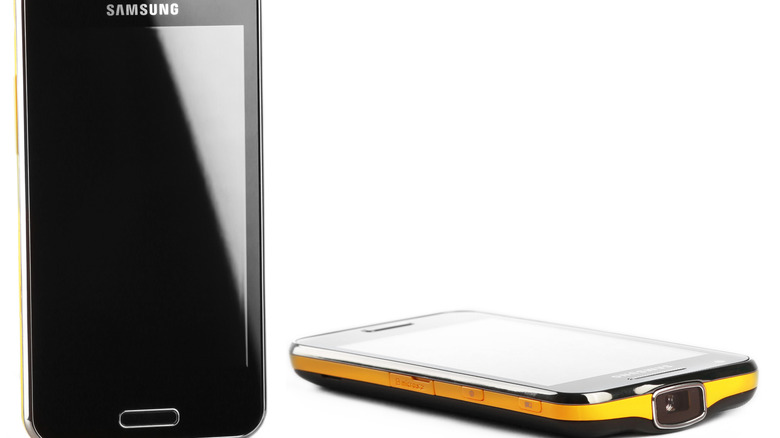
In July 2012, Samsung decided that your phone shouldn't just be a personal screen; it should be a home theater. The Samsung Galaxy Beam was an anomalous device that integrated a built-in 15-lumen pico projector into its top edge. While most phones focuses on making screens brighter, the Beam focused on projecting them onto your bedroom ceiling or a office wall. It could display content at a size of up to 50 inches, which was incredible for the time, even if the resolution was quite low by today's standards.
Holding the Galaxy Beam felt different. It was thick and had a distinct yellow trim that screamed industrial utility. At the time, we thought embedded projection technology might become a standard for professionals, but the high cost and the rapid improvement of screen casting killed the dream. Still, it remains one of the most interesting experimental android smartphone features worth trying if you can find a working model today.
| Feature | Specification |
|---|---|
| Battery | 2,000 mAh |
| Projector | 15-lumen Pico Projector |
| Screen Type | 4.0-inch TFT LCD |
| Weirdest Spec | Projected 640 x 360 nHD resolution |
Pros:
- Genuinely useful for spontaneous group sharing.
- Dedicated projector hardware button for quick access.
- Sturdy build that felt like a tool rather than a toy.
Cons:
- Projection drained the small battery in less than three hours.
- Low brightness required a completely dark room.
- Extremely bulky compared to its contemporaries.
Retro Verdict: 6/10 — A brilliant idea hampered by the battery technology and LED brightness limits of its era.
2. The Keyboard Rebel: Motorola Backflip
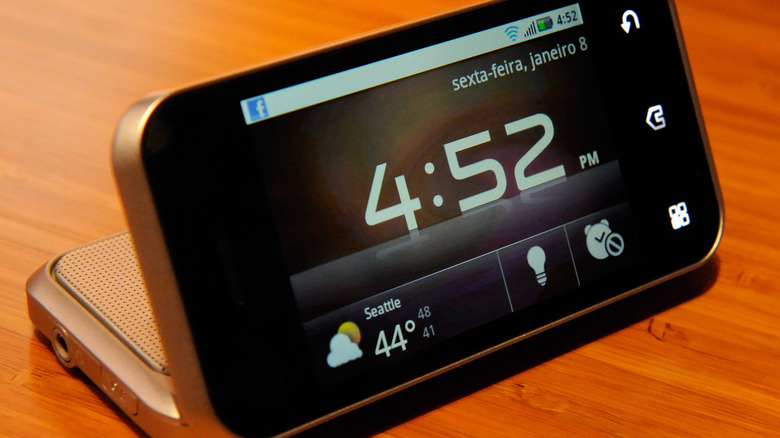
Long before we had folding screens, Motorola was experimenting with weird phones from the 2000s and early 2010s that moved in ways we didn't think possible. The Motorola Backflip featured a physical QWERTY keyboard, but instead of sliding out, it sat on the back of the device. When you flipped it open, the keyboard and the screen would face you, but when closed, the keys were exposed to your palm on the rear of the phone.
The tactile keyboard design was paired with a "Backtrack" touch panel on the reverse of the screen, allowing you to scroll through lists without blocking the display with your fingers. It was a peak example of prototype design concepts making it to the retail shelf. Unfortunately, having the keys exposed 24/7 meant they were prone to catching on pocket lint and general wear and tear. This was a design for users who craved mechanical feedback but didn't mind a five-month software support window and a confusing layout.
Who this was NOT for:
- People who drop their phones (keys were always exposed).
- Users who wanted the latest Android updates.
- Minimalists who prefer slim profiles.
Retro Verdict: 4/10 — Ambitious mechanical innovation that created more problems than it solved, especially regarding durability. It remains one of the best android phones with sliding physical keyboards for enthusiasts who value oddity over utility.
3. The Swivel Sensation: LG Wing 5G
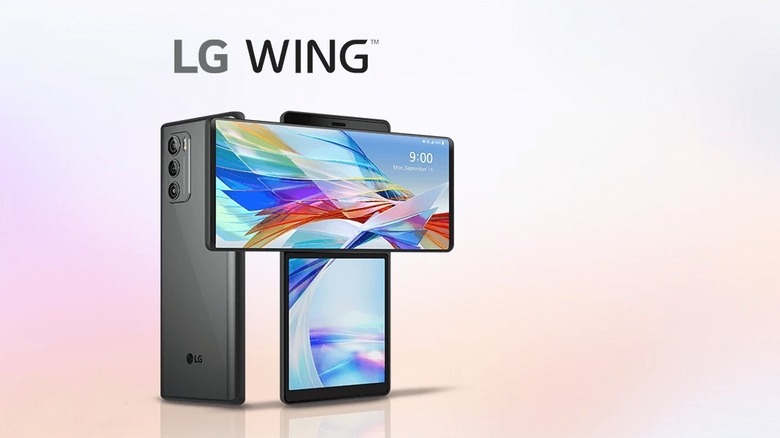
The LG Wing 5G is the most recent entry on our list and perhaps the most tragic. Launched in 2020 as part of the Explorer Project, it featured a T-shaped swivel display mechanics system. With a flick of the thumb, the main 6.8-inch screen rotated 90 degrees to reveal a smaller 3.9-inch screen underneath. This dual-screen utility allowed you to watch a video on the top part while texting on the bottom, or use the bottom screen as a gimbal controller for the camera.
Despite the "cool" factor, the market wasn't ready. The LG Wing reportedly sold fewer than 50,000 units in South Korea by the end of its release year, missing its global target of 2 million units by a massive margin. It was a precursor to modern foldables, proving that users wanted more screen real estate, even if the world wasn't quite sure how to handle a T-shaped phone yet. This is widely considered one of the weirdest android phone designs from the 2000s and 2010s because of just how smooth and high-quality that swivel felt.
| Feature | Specification |
|---|---|
| Primary Screen | 6.8-inch P-OLED Swivel |
| Secondary Screen | 3.9-inch G-OLED |
| Processor | Snapdragon 765G |
| Weirdest Spec | Hexa Motion Sensors for "Gimbal Mode" |
Pros:
- Exceptional build quality with a hydraulic damper for the swivel.
- Unique multitasking capabilities not found on any other device.
- No notch or hole-punch thanks to a pop-up selfie camera.
Cons:
- Very heavy and top-heavy when open.
- Limited third-party app support for the dual-display layout.
- The beginning of the end for LG’s mobile division.
Retro Verdict: 8/10 — A masterpiece of engineering that arrived just as foldables were becoming the new standard for "big screen" phones.
4. The E-Ink Experiment: YotaPhone 2
Coming out of Russia, the YotaPhone 2 addressed a problem we still face today: screen glare and battery drain. While the front was a standard AMOLED panel, the back featured a 4.7-inch always-on E-ink display. Because auxiliary E-ink displays only use power when the image changes, you could keep your boarding pass, a map, or an e-book on the back of the phone for hours without moving the battery percentage.
The YotaPhone 2 was a champion for battery preservation benefits. It was perfect for long flights or reading in direct sunlight. However, the failure of auxiliary screen ecosystems meant that most apps didn't know what to do with the back screen. It became a victim of the consumer tech failures list because it was too expensive for the average buyer and too niche for developers to care about. Still, it remains a favorite for those who value unique phones 2026 for distraction-free reading.
Direct Comparison (Front vs. Back):
- Front Screen: Vivid, battery-heavy, used for videos and games.
- Back Screen: Monochromatic, battery-sipping, used for notifications and reading.
Retro Verdict: 7/10 — A vision for a dual-faced future that we are only now seeing return in much smaller forms through some modern e-ink tablets.
5. The 3D Ambition: Amazon Fire Phone
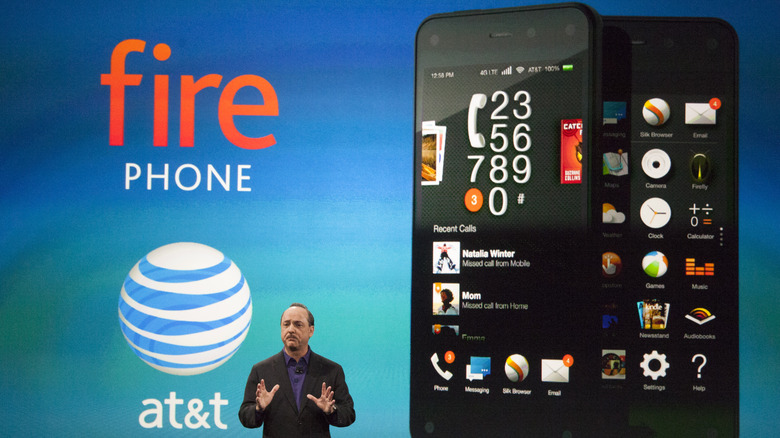
Amazon’s entry into the phone market was meant to change how we shop. The Fire Phone featured "Dynamic Perspective," a system of four front-facing cameras that tracked your head movements to create a 3D effect on the UI without needing glasses. It was a classic example of prioritizing hardware-level gimmicks over ecosystem depth.
The phone was heavily tied to the Amazon ecosystem, including a "Firefly" button that let you identify products to buy them instantly on Amazon. But with a high price tag and a carrier lock to AT&T at launch, it failed spectacularly. Amazon eventually took an $83 million inventory write-down. It serves as a reminder that legacy mobile processors and high-tech cameras can't save a device if the user experience feels like a constant sales pitch.
Pros:
- Advanced head-tracking technology that was genuinely impressive.
- Great build quality with dedicated physical buttons.
- Included premium earbuds and a year of Amazon Prime.
Cons:
- The 3D effect often caused motion sickness for some users.
- Limited app selection (no official Google Play Store).
- Obsessively focused on making the user buy things.
Retro Verdict: 3/10 — Technically impressive but fundamentally flawed in its purpose.
The Modern Legacy: Using Retro Hardware in 2026
If you are interested in using legacy android phones with weird hardware in 2026, you need to be prepared for the software wall. Most of these devices run on versions of Android that are no longer supported by modern apps. However, for a collector, they represent a time when form factor diversity was the primary way to win a customer's heart.
The Nextbit Robin, for example, took a different approach to weirdness by focusing on the cloud. It addressed hardware storage limitations by providing 100GB of integrated cloud storage to complement its 32GB of internal memory, offloading apps you didn't use to the cloud automatically. The Robin, with its mint-green plastic and square edges, felt like a breath of fresh air.
Collecting rare vintage android phones guide:
- Check the Battery: Older lithium-ion batteries can swell; always inspect the back panel for bulging.
- Network Compatibility: Many "weird" phones from the early 2010s rely on 3G networks that have since been decommissioned.
- Side-loading Apps: You will likely need to find older APK files to get any functionality out of these devices today.
Modern smartphone market saturation has led us back to a point where "weird" is starting to return through foldables and flip phones. Looking back at these experimental handsets reminds us that even if a design fails, the ideas it leaves behind—like multi-screen productivity or dedicated reading modes—often find their way into the devices we love today.
FAQ
What is the weirdest phone brand?
While mainstream brands like Samsung and Motorola have had their odd moments, niche brands like Yota and Nextbit are often cited as the weirdest. Kyocera also produced several notable dual-screen and rugged experiments, such as the Echo, which featured two screens connected by a complex physical bridge.
What is the coolest Android phone?
"Cool" is subjective, but many enthusiasts consider the LG Wing 5G or the original Motorola Razr folding phone to be the peak of cool factor due to their mechanical sophistication and "wow" effect when opened in public.
What are the top dumb phones?
If you're looking for simplicity over weirdness, the Light Phone II and the Punkt MP02 are the top-rated minimal devices. They strip away the internet-heavy features of Android to focus entirely on calls and texts, using high-quality E-ink or monochromatic displays.
What is the dumbest smartphone available?
The term is often applied to devices that have high specs but counter-intuitive designs, such as the Amazon Fire Phone, which was criticized for being more of a shopping tool than a communication device. However, some also use it to describe "minimalist" smartphones that purposely limit their own functionality to prevent phone addiction.
Conclusion: Will We Ever Be Weird Again?
As an editor who has watched the transition from tactile buttons to seamless glass, I miss the era of the weirdest android phone designs from the 2000s and 2010s. We are currently in a period of safe, iterative design, but the spirit of the LG Wing lives on in the folding phones of today. Companies like Nothing and Honor are starting to push the boundaries of aesthetics and hardware once more, suggesting that perhaps the era of the rules-breaker isn't over—it’s just evolving.