Quick Facts
- Entry Price: The 2026 Nissan Leaf now starts at $31,485 (including destination), marking a 15% jump from previous entry-level estimates.
- The "Missing" Trim: Nissan has indefinitely delayed the 52-kWh base "S" trim, effectively ending the era of the sub-$30,000 Leaf.
- Standard Battery: All 2026 models now feature a 75-kWh liquid-cooled battery, providing an EPA-estimated range of up to 303 miles.
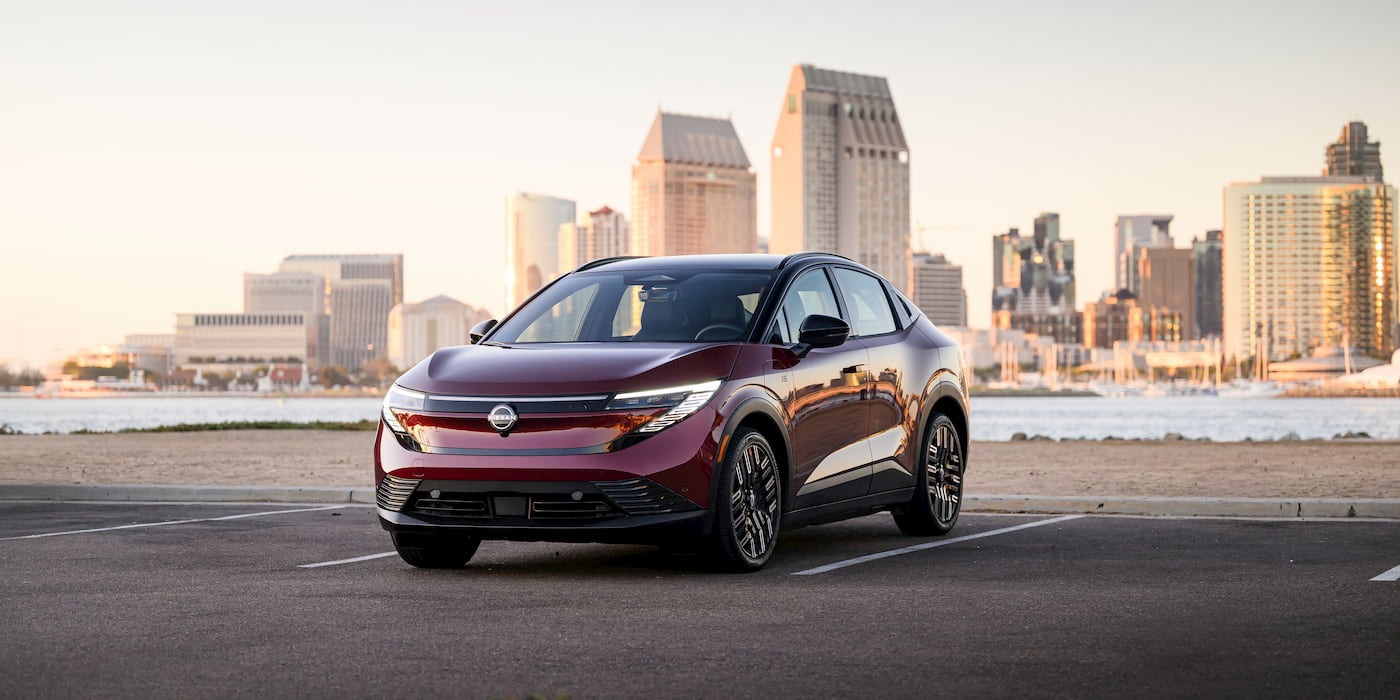
- New Tech: The third-generation Leaf adopts a sleek SUV silhouette, a NACS charging port, and available Google Built-in integration.
The Death of the $28,000 Entry Point
For over a decade, the Nissan Leaf has been the standard-bearer for the "everyman" electric vehicle. It was the car you bought when you wanted to stop paying for gas without taking on a second mortgage. However, the 2026 model year marks a significant—and for some, painful—shift in strategy.
If you were holding out for a sub-$30,000 Nissan Leaf in 2026, the short answer is no; that ship has sailed. Nissan has confirmed it is indefinitely delaying the base S trim, which was expected to carry a 52-kWh battery and a price tag in the high $27,000 range. By scrapping this entry-level configuration, the "floor" for Leaf ownership has risen by approximately 15%.
This isn't just a minor pricing adjustment; it represents the end of an era. The Leaf was one of the last remaining pillars of the affordable EV market. With its departure from the sub-$30k segment, budget-conscious buyers are left with a landscape that feels increasingly gated behind a $30,000+ entry fee.
Alex’s Insight: We’re seeing a "gentrification" of the EV market. Manufacturers are realizing that thin margins on small-battery cars aren't sustainable in a high-interest-rate environment. By cutting the S trim, Nissan is effectively telling us that the "budget EV" is being redefined from $25,000 to $32,000.
The New Baseline: Leaf S+ Price and Specs
With the S trim off the table, the new entry point is the 2026 Nissan Leaf S+. This model starts at an MSRP of $29,990, but once you add the mandatory $1,495 destination fee, the "real-world" starting price lands at $31,485.
So, what are you getting for that extra $3,500 over the scrapped base model? In a word: Range. The 2026 Nissan Leaf comes equipped with a 75-kWh liquid-cooled battery across all available trims. This is a massive leap forward from the previous generation's base batteries, which were air-cooled and prone to thermal throttling.
The result is an EPA-estimated range of up to 303 miles. This 75-kWh pack offers roughly 44% more capacity than the 52-kWh unit that was originally intended for the S trim. Furthermore, Nissan has put the Leaf through the wind tunnel, reducing its drag coefficient from 0.29 to a much slicker 0.26.
2026 Nissan Leaf Trim Comparison
| Feature | Leaf S+ | Leaf SV+ | Leaf Platinum+ |
|---|---|---|---|
| Starting MSRP | $31,485 | $34,200 (Est.) | $37,500 (Est.) |
| Battery Size | 75 kWh | 75 kWh | 75 kWh |
| Max Range | 303 Miles | 285 Miles* | 280 Miles* |
| Charging Port | NACS (Tesla-style) | NACS (Tesla-style) | NACS (Tesla-style) |
| Key Tech | 12.3-inch Display | Google Built-In | ProPILOT Assist 2.0 |
*Higher trims often see a slight range dip due to larger wheels and increased curb weight.
Why Nissan Scrapped the S Trim
You might wonder why a company would walk away from the "Cheapest EV in America" title. The decision to cancel the Leaf S is a calculated response to the "evolving EV landscape."
- Simplified Production: Building two different battery packs (52 kWh and 75 kWh) is expensive. By standardizing the 75-kWh pack across the entire assembly line, Nissan reduces manufacturing complexity and scales its battery procurement more efficiently.
- Margin Protection: Smaller batteries offer lower profit margins. In an era of fluctuating lithium prices and potential new tariffs, Nissan is prioritizing higher-margin trims that can absorb cost increases without going into the red.
- Market Sentiment: Range anxiety remains the #1 barrier to EV adoption. Nissan likely gambled that consumers would rather pay $31,000 for 300 miles of range than $28,000 for 180 miles. In the eyes of the marketing department, the "value" proposition is stronger with the S+, even if the "affordability" proposition takes a hit.
Paying for "Too Much" Range?
There is a catch to this "Range-First" strategy. Think of it like a coffee shop that removes the "Small" size from the menu. You might only want a 12oz cup for your morning commute, but now you’re forced to buy the 20oz "Grande."
For the urban commuter who drives 30 miles a day and charges at home every night, 303 miles of range is overkill. That extra battery capacity isn't weightless—the S+ is significantly heavier than the projected S trim would have been. This extra weight affects braking distances and nimble handling, which were hallmarks of the original Leaf.
Furthermore, while the price has gone up, some essential features remain behind "paywalls." For instance:
- Google Built-In: Expected to be a subscription-based or higher-trim feature.
- Battery Heaters: Often relegated to "Cold Weather Packages," which is frustrating for a car that now markets itself as a long-distance traveler.
- Charging: While the NACS port is a welcome addition for Tesla Supercharger access, the Leaf still lags behind the Ioniq 5 or EV6 in terms of peak DC fast-charging speeds.
2026 Leaf vs. The Competition
The 2026 Leaf no longer exists in a vacuum. It is entering a "Goldilocks" zone where several heavy hitters are competing for your $30,000 to $35,000.
The Chevy Bolt Factor
While the current Bolt is sunsetting, the 2027 Chevrolet Bolt is looming on the horizon. Built on the Ultium platform, it aims to reclaim the sub-$30k crown. If you can wait 12 months, the Bolt might offer the budget entry point that Nissan just vacated.
The Equinox EV
For just a few thousand dollars more than the Leaf S+, the Chevrolet Equinox EV offers a much larger cabin, more modern software, and the option for Super Cruise—one of the best hands-free driving systems on the market. The Leaf’s ProPILOT Assist is good, but it’s starting to feel like yesterday's tech in comparison.
The Wildcard: The "Slate" Pickup
For those who don't need a hatchback, the rumored Telo MT or "Slate" style compact pickups are targeting a $25,000 price point. While these are niche products, they appeal to the same "utility-on-a-budget" crowd that once flocked to the Leaf S.
Summary: Redemption or Missed Opportunity?
The 2026 Nissan Leaf is a vastly better vehicle than the one it replaces. The move to a 75-kWh liquid-cooled battery solves the Leaf’s oldest Achilles' heel: thermal management and range degradation. The SUV styling is modern, and the 303-mile range puts it at the top of its class for efficiency.
However, by scrapping the S trim, Nissan has surrendered its most potent marketing weapon. The Leaf is no longer the "gateway" to electric driving; it is now a mid-tier contender. It’s a compelling EV, to be sure, but in losing its "cheapest" crown, it must now justify its existence against more technologically advanced rivals from Hyundai and GM.
For the buyer who wants a reliable, long-range EV from a legacy brand, the Leaf S+ is a solid value. But for the buyer who just wanted a $25,000 electric commuter, the search continues.
FAQ
Is the 2026 Nissan Leaf eligible for the federal tax credit? As of current Treasury guidelines, the 2026 Leaf's eligibility depends on battery sourcing. Because Nissan is shifting production and battery components to meet domestic requirements, it may qualify for the partial $3,750 or full $7,500 credit, but final certification is pending.
Can I charge the 2026 Leaf at a Tesla Supercharger? Yes. The 2026 model adopts the NACS (North American Charging Standard) port natively, meaning you can plug directly into most Tesla Superchargers without needing a bulky adapter.
Does the 2026 Leaf still use CHAdeMO? No. Nissan has finally retired the CHAdeMO plug in favor of NACS for the North American market, solving one of the biggest "future-proofing" concerns for prospective buyers.