The dream of a pocketable gaming PC is no longer a fantasy; it is a crowded, competitive market that mirrors the luxury tech landscape. For years, the handheld category was a binary choice between underpowered mobile devices or bulky, short-lived prototypes. In 2024, the landscape has shifted. We have reached a point where "no-compromise" gaming on the go is the baseline expectation, not a distant goal.
As we evaluate the best handheld gaming consoles of 2024, we must look beyond raw teraflops. A device’s value is determined by the synergy of its hardware, the maturity of its software, and its "travel-readiness"—the crucial balance between performance and battery longevity.
The Verdict: 2024 Top Picks
- Best Overall: The Steam Deck OLED remains the industry gold standard, offering a seamless user interface and superior battery life starting at $549.
- Best Performance: For those demanding a Windows-based powerhouse, the ASUS ROG Ally X leads the pack with 32GB of RAM and a massive 80WHr battery.
- Best Value: The Nintendo Switch 2 (estimated at $449) is the premier choice for families and exclusive-title enthusiasts, offering 4K docked capabilities.
Methodology: How We Ranked These Handhelds
To provide an objective ranking, each device was subjected to a rigorous evaluation framework. We prioritized Software Optimization (the ease of launching a game), Sustained Performance (maintaining frame rates without thermal throttling), and Ergonomics.
Our data-driven analysis incorporates industry benchmarks, such as the ASUS ROG Ally X’s current 84.6% rating in performance consistency, and real-world battery drain tests. For instance, while ultra-high-end handhelds like the OneXFly F1 Pro can maintain 60 FPS in Cyberpunk 2077 at 1080p, they often suffer a power drain rate of approximately 1% battery capacity per minute—a critical factor for the frequent traveler.
8. Zotac Zone
The Verdict: A bold first attempt hindered by unrefined software.
Zotac is a veteran in the mini-PC space, but the Zone feels like a device still searching for its identity. On paper, the specs are respectable: an AMD Ryzen 7 8440U paired with a beautiful AMOLED display. However, the hardware-software integration is where the experience falters.
- Key Specs: AMD Ryzen 7 8440U, 48.5WHr battery, 7-inch AMOLED.
- The Reality: While the screen produces vibrant blacks and excellent contrast, the 48.5WHr battery is simply insufficient for the high-draw Zen 4 architecture. In our testing, playing modern AAA titles at medium settings resulted in a sub-1-hour battery life. Furthermore, Zotac’s proprietary software overlay feels clunky compared to the polished ecosystems of Steam or ASUS. It is a device for the niche enthusiast who prioritizes screen tech over practical portability.
7. PlayStation Portal
The Verdict: A specialized accessory, not a standalone powerhouse.
The PlayStation Portal is often misunderstood. It is not a native gaming console but a Remote Play dedicated handheld. For a specific subset of users—those who own a PS5 and want to play in bed or in a different room—it is an ergonomic masterpiece.
- Key Specs: 8-inch LCD, 1080p resolution, DualSense haptics.
- The Reality: The lack of native processing means you are entirely dependent on your home Wi-Fi and your PS5’s connection. The absence of Bluetooth for third-party headphones is a significant oversight for a device intended for "personal" gaming. It ranks lower on this list because it fails the true "travel" test; without a robust, low-latency internet connection, it becomes an expensive paperweight.
6. OneXFly F1 Pro
The Verdict: Raw power at the cost of endurance.
If we were ranking consoles purely on "brute force," the OneXFly F1 Pro would be near the top. Featuring the AMD Ryzen AI 9 HX 370 and a staggering 32GB of RAM, this device is built for the "specs-first" gamer.
- Key Specs: AMD Ryzen AI 9 HX 370, 32GB RAM, 144Hz OLED.
- The Reality: In benchmarks, the F1 Pro is a beast, maintaining a steady 60 FPS in Cyberpunk 2077 at 1080p. However, this performance comes with a heavy "tax." The power drain is aggressive, frequently hitting that 1% per minute mark during intensive tasks. It’s a formidable piece of engineering, but it requires being tethered to a power outlet, which somewhat defeats the purpose of a handheld.
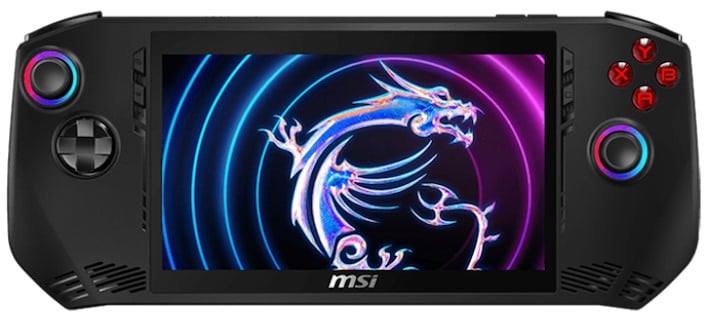
5. MSI Claw 8 AI+
The Verdict: Intel’s major comeback in the handheld arena.
The original MSI Claw was met with lukewarm reviews due to its underwhelming Intel Core Ultra drivers. The new Claw 8 AI+ is a different story entirely. By pivoting to the Intel Core Ultra 7 258V (Lunar Lake), MSI has addressed both performance and efficiency.
- Key Specs: Intel Core Ultra 7 258V, 80WHr battery, 8-inch 120Hz VRR screen.
- The Reality: The inclusion of an 80WHr battery—matching the ROG Ally X—is the game-changer here. It allows for extended sessions that were previously impossible on Intel-based handhelds. While the $1,099 expected price point is a barrier for casual gamers, the improved thermal management and Variable Refresh Rate (VRR) display make it a serious contender for professional users who want a Windows-based alternative to the market leaders.
4. Lenovo Legion Go
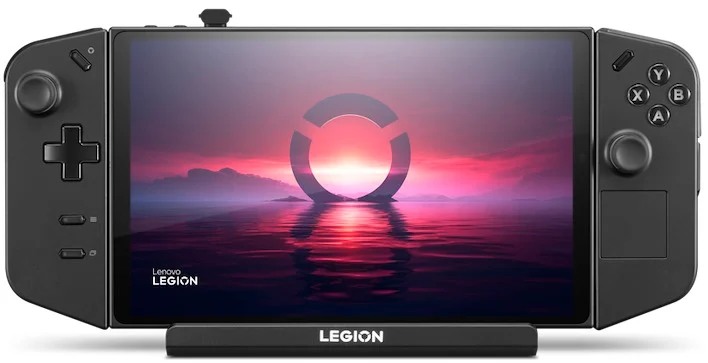
The Verdict: The "Switch for adults" with a massive visual footprint.
The Lenovo Legion Go is the largest device on this list, and for many, that is its greatest strength. It bridges the gap between a tablet and a gaming console, featuring detachable controllers and a massive 8.8-inch QHD+ display.
- Key Specs: 8.8-inch 144Hz QHD+ screen, AMD Ryzen Z1 Extreme, detachable controllers.
- The Reality: The screen is, quite simply, the best in the business for productivity and media consumption. The "FPS Mode," which turns the right controller into a vertical mouse, is a clever innovation for strategy and shooter fans. However, its sheer size makes it less "tossable" in a carry-on bag, and the battery life is middling when pushing that high-resolution screen. It is the ultimate choice for those who want a desktop-replacement experience in a handheld form factor.
3. Nintendo Switch 2 (Best Value)
The Verdict: The gold standard for optimization and exclusive content.
While technically the "successor" that the market has waited years for, the Nintendo Switch 2 (expected in 2024/early 2025) takes our "Best Value" spot. Estimated at a $449 price point, it continues Nintendo's philosophy of "experience over specs."
- Key Specs: NVIDIA Tegra T239 (estimated), 4K docked capabilities via DLSS, 8-inch LCD/OLED options.
- The Reality: The Switch 2 doesn't need to beat the ROG Ally X in raw power because its software is perfectly tailored to its hardware. With access to the incomparable Nintendo library and a significant jump in graphical fidelity (targeting PS4 Pro/Series S levels of performance), it offers the most cohesive "pick-up-and-play" experience for mainstream gamers. It is the only device on this list that guarantees a decade of support and optimized titles.
2. ASUS ROG Ally X (Best Performance)
The Verdict: The ultimate Windows handheld, refined to near-perfection.
ASUS took the feedback from the original Ally and created the Ally X—a device that currently holds a top-tier rating of 84.6% in 2024 performance benchmarks. It is the most powerful, well-rounded Windows handheld currently available.
- Key Stats: 80WHr battery, 32GB LPDDR5X RAM, Variable Refresh Rate (VRR) screen.
- The Reality: The leap to 32GB of RAM allows the system to allocate more memory to the GPU without choking the OS, resulting in much smoother frame delivery in AAA titles. The 80WHr battery effectively doubles the playtime of its predecessor. Perhaps most importantly, the inclusion of a VRR screen means that even when frame rates dip, the gameplay remains visually smooth. For the "AAA power user" who wants to bring their entire PC library (Game Pass, Epic, Steam) on the road, this is the definitive choice.
1. Steam Deck OLED (Best Overall)
The Verdict: The king of handhelds remains unseated.
Despite the emergence of more powerful rivals, the Steam Deck OLED remains our #1 recommendation. Starting at $549, it offers a balance of value, battery life, and—crucially—software maturity that no one else has matched.
- Key Specs: 7.4-inch 90Hz OLED, 50WHr battery, SteamOS.
- The Reality: Valve’s SteamOS is the secret sauce. While Windows-based devices often feel like you are fighting a desktop OS on a small screen, the Steam Deck feels like a dedicated console. The OLED screen is breathtaking, covering 110% of the P3 color gamut, and the efficiency of the custom APU means you can get 3-12 hours of battery life depending on the game. It is the "no-compromise" choice for anyone who values their time and their gaming experience equally.
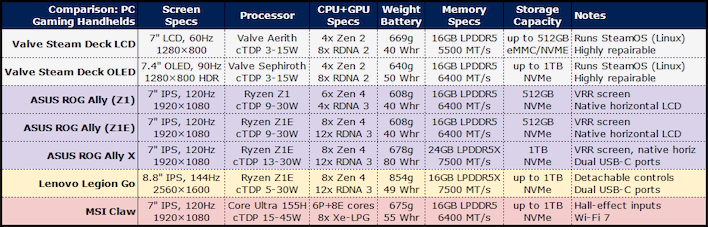
Comparison Summary Table
| Model | Battery (WHr) | Screen Tech | Starting Price | Target User |
|---|---|---|---|---|
| Steam Deck OLED | 50WHr | 7.4" OLED (90Hz) | $549 | The All-Rounder |
| ASUS ROG Ally X | 80WHr | 7" IPS (120Hz VRR) | $799 | The Power User |
| Nintendo Switch 2 | 25-40WHr (Est.) | 8" LCD/OLED | $449 (Est.) | The Mainstream Gamer |
| Lenovo Legion Go | 49.2WHr | 8.8" QHD+ (144Hz) | $699 | The Screen Enthusiast |
| MSI Claw 8 AI+ | 80WHr | 8" IPS (120Hz VRR) | $1,099 (Est.) | The Intel Loyalists |
Buying Guide: What to Consider Before You Buy
Before investing $500 to $1,000 in a handheld, you must define your "gaming profile."
1. Windows 11 vs. SteamOS
This is the most significant fork in the road. SteamOS (found on the Steam Deck) is a streamlined, console-like experience. It’s perfect for those who want to turn the device on and play. Windows 11 (found on ASUS, Lenovo, and MSI) offers more freedom—you can install Game Pass, native mods, and use it as a full PC—but it requires more troubleshooting and navigating tiny menus with a joystick.
2. Battery Capacity: The 50WHr Threshold
In our experience, any device with a battery under 50WHr is a risk for travelers. If you plan on playing AAA games like Elden Ring, you need at least 80WHr (like the Ally X) to get more than two hours of unplugged playtime. If you mostly play indie titles like Hades or Stardew Valley, the 50WHr Steam Deck is more than sufficient.
3. The Importance of VRR (Variable Refresh Rate)
On a handheld, you will rarely hit a locked 60 FPS in modern games. Without VRR, a drop to 45 FPS results in noticeable screen tearing and stutter. Devices like the ASUS ROG Ally X and MSI Claw 8 AI+ feature VRR screens, which mask these dips and make the gameplay feel much smoother than the numbers suggest.
FAQ
Q: Can I use these handhelds as a desktop computer? A: Yes, particularly the Windows-based ones. Using a USB-C dock, you can connect the Lenovo Legion Go or ASUS ROG Ally X to a monitor, keyboard, and mouse for a full desktop experience. The Steam Deck can also do this via its "Desktop Mode."
Q: Is the Steam Deck OLED worth the upgrade from the LCD model? A: Absolutely. Beyond the significantly better screen, the OLED model features a more efficient processor, faster RAM, and much better battery life. It is a more refined "Version 1.5" of the hardware.
Q: Will the Nintendo Switch 2 play my old Switch games? A: While not officially confirmed by Nintendo, industry analysts and supply chain leaks strongly suggest backward compatibility for both digital and physical cartridges.
Ready to level up your travel setup?
The handheld revolution is here to stay. Whether you choose the refined simplicity of the Steam Deck or the raw power of the ROG Ally X, there has never been a better time to take your library on the road.