Quick Facts
- Most Iconic Models: 1959 Plymouth Sport Fury, 1973 Chevrolet Monte Carlo, 1970s Oldsmobile Cutlass, 1957 Aurora Safety Car, and 2010 Renault Clio.
- Primary Purpose: Designed to facilitate easier entry and exit, especially in the low-slung, stylish coupes of the mid-20th century.
- Technical Mechanisms: Typically involved a 40-degree to 90-degree pivot using nylon rollers, circular tracks, and cable-actuated levers.
- Current Status: Largely discontinued in mass-market vehicles due to high manufacturing costs, maintenance issues, and modern safety regulations regarding side-impact airbags and three-point seatbelts.
Imagine, for a moment, the American driveway in 1959. Tailfins were reaching their zenith, chrome was applied with a heavy hand, and the "Forward Look" design language promised a future that felt more like the Space Age than the Eisenhower era. In this world of mechanical ingenuity, even the simple act of sitting down was reimagined. The swivel seat was not merely a gimmick; it was a sophisticated solution to a very stylish problem. As cars became lower, longer, and wider, the traditional "slide-in" move became increasingly undignified for the well-dressed driver. The solution? Let the seat come to you.
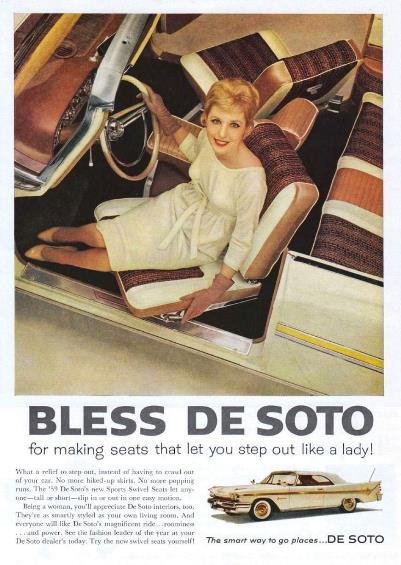
While several classic cars have become synonymous with this feature, the most iconic models include the avant-garde 1957 Aurora Safety Car, the legendary 1959 Plymouth Sport Fury, the 1973 Chevrolet Monte Carlo with its "Strato Buckets," the ubiquitous 1970s Oldsmobile Cutlass, and the surprisingly modern 2010 Renault Clio. Originally introduced to bridge the gap between accessibility and luxury, these seats eventually vanished as the complexity of modern safety standards and manufacturing costs outweighed their retro charm.
1. 1957 Aurora Safety Car: The Revolutionary Swivel Captain Seats
Before the swivel seat became a hallmark of Detroit luxury, it was conceived as a radical safety innovation. The 1957 Aurora Safety Car, designed by Father Alfred Juliano, a Catholic priest with a background in industrial design, remains one of the most polarizing vehicles ever built. Juliano’s vision was the "ultimate safety vehicle," a fiberglass-bodied behemoth intended to protect its occupants at all costs.
The swivel seats in the Aurora were not about convenience—they were about survival. Juliano designed the captain's seats to pivot 180 degrees, allowing passengers to turn backward during an imminent crash to absorb the force of impact across their backs rather than their chests. While the car never made it past the prototype stage (largely due to its staggering $12,000 price tag and unconventional aesthetics), it set a precedent for the idea that a car seat could be a dynamic, moving component rather than a static bench.
2. 1959 Plymouth Sport Fury: The 40-Degree 'Swing-Out' Standard
If the Aurora was a fringe experiment, the 1959 Plymouth Sport Fury was the commercial peak of the swivel seat trend. In 1959, approximately 24,000 units of the Plymouth Sport Fury were sold, and many featured the optional "Swing-Out" bucket seats. This was part of Chrysler Corporation's wider push to dominate the "Forward Look" era.
The engineering was deceptively simple yet felt like pure magic. By pulling a lever, the seat would pivot outward 40 degrees, clearing the door sill and allowing the driver to step out with the grace of a Hollywood starlet. Under the hood, the Sport Fury was often paired with the Golden Commando V-8 engine, making it as fast as it was fashionable.

The 40-degree pivot was the sweet spot. It provided enough clearance for the driver’s legs to exit without requiring a massive reconfiguration of the interior floor pan. However, the mechanism relied on a series of nylon rollers and a heavy-duty pivot point that required frequent lubrication to prevent the "swing" from becoming a "shove."

3. 1973 Chevrolet Monte Carlo: The Era of 'Strato Buckets'
After a hiatus in the 1960s, the swivel seat made a surprising comeback in the early 1970s, migrating to the intermediate-sized personal luxury coupes that were then dominating the American market. The 1973 Chevrolet Monte Carlo introduced the "Strato Bucket" seats, which could pivot 90 degrees to face the door.
These seats were a hallmark of the 1970s "Personal Luxury" craze. They featured a manual release lever located on the side of the seat base. While they were a massive hit in the showroom, contemporary reviews were mixed. Road & Track famously critiqued the Strato Buckets as being "uncomfortably upright," noting that the swivel mechanism forced the seat to be mounted higher and flatter than a traditional bucket seat, sacrificing lumbar support for the sake of the pivot.
Despite the ergonomic compromises, the novelty factor was undeniable. In an era where two-door coupes had doors the size of small aircraft wings, the swivel seat made getting into a tight parking spot significantly easier.
4. 1970s Oldsmobile Cutlass: Marketing Convenience and Success
No car utilized the swivel seat as a marketing tool more effectively than the Oldsmobile Cutlass. During the late 1970s, the Cutlass was a massive commercial success, maintaining sales of over 450,000 units annually between 1978 and 1981. A significant portion of these buyers opted for the swivel bucket seats.

Oldsmobile’s marketing didn't just focus on ease of entry; they pitched the seats as a social feature. It was sold as a way to facilitate "seat-swapping" during long road trips or as a high-tech convenience for modern drivers. By this time, the mechanics had evolved from simple manual levers to more integrated systems, including some that were coupled to the door latch, meaning the seat would automatically pivot toward you as the door opened.
Editor's Note: If you are restoring a 70s Cutlass today, pay close attention to the seat tracks. The original nylon rollers often cracked over time, causing the seats to wobble—a common "tell" for high-mileage examples of these classic cruisers.
5. 2010 Renault Clio: The Modern European Outlier
While swivel seats are often viewed through a nostalgic American lens, one of the most practical applications appeared in Europe much later. The 2010 Renault Clio reintroduced the feature not as a luxury gimmick, but as a dedicated accessibility aid.
Available on the Dynamique Tom Tom and Expression Clim trims, the Clio’s swivel seat offered a 75-degree rotation. It was specifically designed for elderly passengers or those with limited mobility, allowing them to sit down while facing outward and then rotate into the cabin. This factory-fitted option, produced at Renault's Flins plant, cost approximately 1,600 Euros. It remains a rare example of a modern manufacturer prioritizing mechanical accessibility over the simpler (but less effective) solution of wider-opening doors.
Comparison of Iconic Swivel Seat Models
| Model Year | Vehicle | Swivel Angle | Primary Purpose |
|---|---|---|---|
| 1957 | Aurora Safety Car | 180 Degrees | Impact Safety / Force Absorption |
| 1959 | Plymouth Sport Fury | 40 Degrees | Luxury & Ease of Entry |
| 1973 | Chevrolet Monte Carlo | 90 Degrees | Personal Luxury Aesthetic |
| 1978 | Oldsmobile Cutlass | 90 Degrees | Ease of Entry & Marketing Appeal |
| 2010 | Renault Clio | 75 Degrees | Accessibility for Limited Mobility |
The Vanishing Act: Why Did Swivel Seats Disappear?
By the mid-1980s, the swivel seat had almost entirely vanished from the automotive landscape. To the casual observer, it might seem like a loss of "soul," but the reality was driven by three hard truths of automotive engineering: maintenance, safety, and space.
Mechanical Complexity and Maintenance
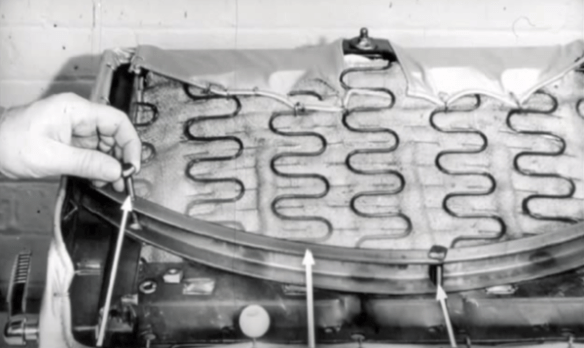
The swivel mechanism was inherently prone to failure. The combination of heavy steel tracks, nylon rollers, and cable-actuated levers meant that as the car aged, the seat would become "crunchy" or stuck. For manufacturers, this meant high warranty repair costs. For owners, it meant a driver's seat that might eventually refuse to lock into the forward-facing position—a major safety hazard.
Modern Safety Standards
The advent of three-point seatbelts and side-impact airbags dealt the final blow. A swivel seat requires a massive amount of structural reinforcement at the pivot point to ensure it stays attached to the floor during a collision. Furthermore, modern seatbelts are often integrated into the B-pillar; a rotating seat makes it difficult to maintain the correct belt geometry. Integrating side-impact airbags into a seat that can face any direction adds a level of complexity and cost that most manufacturers are unwilling to bear.
Space Constraints
Today’s cars have much higher floors (to accommodate exhaust systems, batteries, or structural bracing) and thicker doors filled with safety beams and electronics. The physical "footprint" required for a seat to rotate 40 to 90 degrees simply doesn't exist in most modern interiors without making the cabin feel cramped or the seat itself uncomfortably small.
FAQ: Swivel Seats in Automotive History
Q: Were swivel seats ever offered on the driver's side? A: Yes. In most American classics like the 1959 Plymouth or the 1973 Monte Carlo, both the driver and passenger seats could be equipped with the swivel mechanism.
Q: Can you retrofit swivel seats into a modern car? A: While aftermarket "swivel bases" exist (primarily for camper vans like the Mercedes Sprinter), retrofitting them into a modern passenger car is generally discouraged due to interference with airbag sensors and seatbelt pre-tensioners.
Q: Which car had the widest rotation? A: The 1957 Aurora Safety Car was designed to rotate a full 180 degrees. Among production cars, 90 degrees (seen in the GM models of the 70s) was the standard maximum.
Conclusion
The swivel seat represents a unique chapter in automotive history where designers were unafraid to challenge the fundamental ergonomics of the car. From the safety-focused vision of the Aurora to the high-volume success of the Oldsmobile Cutlass, these seats were more than just a place to sit—they were a statement of mechanical ingenuity and a nod to a future that valued the "grand entrance." While safety regulations and modern packaging have pushed them to the sidelines, they remain a beloved feature for collectors who appreciate the days when a car didn't just drive you; it invited you in.