Quick Facts
- Real-Life Equivalent to Skyfall's Palm-Reader: The Biofire Smart Gun uses dual-mode biometrics (fingerprint and facial recognition) to ensure only the owner can fire the weapon.
- The Submarine Car Alternative: The Gibbs Aquada is a high-speed amphibian (HSA) capable of 100 mph on land and 30+ mph on water, featuring a six-second transition time.
- The Ultimate Collector’s Piece: The Montegrappa 007 Spymaster Duo is limited to 380 units, a nod to the .380 ACP caliber of Bond’s signature Walther PPK.
- Bionic Reality: Modern i-LIMB bionic hands use myoelectric sensors to interpret muscle signals, far surpassing the mechanical "metal hands" seen in early 007 films.
- Availability: While most of this tech was once classified or purely conceptual, all items listed are either commercially available or in active production for 2024.
Bridging the Gap Between Q Branch and Your Shopping Cart
For over sixty years, James Bond has served as the unofficial laboratory for the future. From the moment Major Boothroyd—better known as Q—handed Sean Connery a modified Walther PPK, the 007 franchise has blurred the line between cinematic fantasy and military-grade engineering. As a travel and tech critic, I’ve often observed how high-end travel gear and security protocols eventually catch up to the "gadgets" we once thought were impossible.
In 2024, the gap has effectively closed. The "magic" of the Q Branch is no longer restricted to 35mm film; it is being sold in boutique showrooms and advanced tech startups. Whether it is the biometric security protecting your personal assets or the amphibious vehicles revolutionizing coastal exploration, James Bond technology in real life has arrived. For the discerning enthusiast, "buy James Bond gadgets today" is no longer an aspirational search term—it is a reality. From the Biofire Smart Gun to microchip implants, let’s analyze the real-life 007 tech that is currently redefining the intersection of luxury, security, and utility.

1. The 'Skyfall' Biometric Weapon: The Biofire Smart Gun
In the 2012 film Skyfall, Bond is issued a Walther PPK/S with a palm-print reader integrated into the grip. The plot point is pivotal: the gun is coded to 007’s DNA, rendering it useless to an assassin who attempts to turn the weapon against him. This was once considered the pinnacle of "near-future" sci-fi. Fast forward to today, and the Biofire Smart Gun has transformed this concept into a commercially available firearm designed for home defense.
Bond Heritage: In 'Skyfall,' the biometric sensor ensures the weapon only functions for its authorized user, a fail-safe that ultimately saves Bond’s life during a confrontation in a Macau casino.
Technical Breakdown
- Dual-Biometric Authentication: Unlike the movie's simple palm reader, Biofire utilizes both a high-speed capacitive fingerprint sensor and 3D infrared facial recognition.
- The "Smart" Core: The weapon is entirely electronic; there is no mechanical link between the trigger and the firing pin. The trigger only "activates" when the user is verified.
- Speed and Reliability: The system unlocks in less than 200 milliseconds, ensuring that the safety benefit does not come at the cost of defense readiness.
- Battery Life: Features a rechargeable lithium-ion battery that lasts for months on a single charge.
The Biofire Smart Gun represents a significant leap in firearm safety, addressing the issues of unauthorized use and accidental discharges. For a critic looking at data-driven security, this is the most direct bridge between the silver screen and a real-world product.
2. The Amphibious Escape: Gibbs Aquada vs. 'Wet Nellie'
The Lotus Esprit S1 from The Spy Who Loved Me (1977)—affectionately nicknamed "Wet Nellie"—is perhaps the most iconic gadget in the franchise’s history. While a fully submersible car capable of launching missiles remains in the realm of fiction (due to the immense pressure requirements and oxygen storage), the Gibbs Aquada is the closest high-speed realization of Bond’s amphibious dream.
Bond Heritage: The Lotus Esprit’s transformation from a sleek sports car into a sleek submarine remains the gold standard for Bond escapes, proving that no terrain—land or sea—is off-limits.
Technical Breakdown
- HSA Technology: High-Speed Amphibian (HSA) technology allows the Aquada to plane on water like a traditional speedboat, rather than just floating.
- Transition Time: With the push of a button, the wheels retract into the wheel arches and the jet drive activates in roughly six seconds.
- Performance Metrics: On land, it performs like a high-end roadster with speeds exceeding 100 mph. On water, it reaches over 30 mph, powered by a 175hp V6 engine.
- Design Influence: The Aquada’s sleek, roofless design and mid-engine layout echo the sports car aesthetics seen in Bond’s personal fleet.
Comparison: Movie Prop vs. Real-Life Product
| Feature | Lotus Esprit S1 (Movie) | Gibbs Aquada (Real Life) |
|---|---|---|
| Max Land Speed | 120+ mph | 100+ mph |
| Max Water Speed | N/A (Submerged) | 30+ mph |
| Submersible? | Yes (to 30ft) | No (Surface only) |
| Transition Time | Instant (Cinematic) | 6 Seconds |
| Availability | Museum Piece | Limited Commercial Production |
While the Gibbs Aquada is a rare find today, the technology pioneered by Alan Gibbs continues to influence the "amphibious" modes of the Tesla Cybertruck (which Musk explicitly stated was inspired by 'Wet Nellie') and the more compact Gibbs Quadski.
3. The Hidden Message: Montegrappa 007 Spymaster Duo
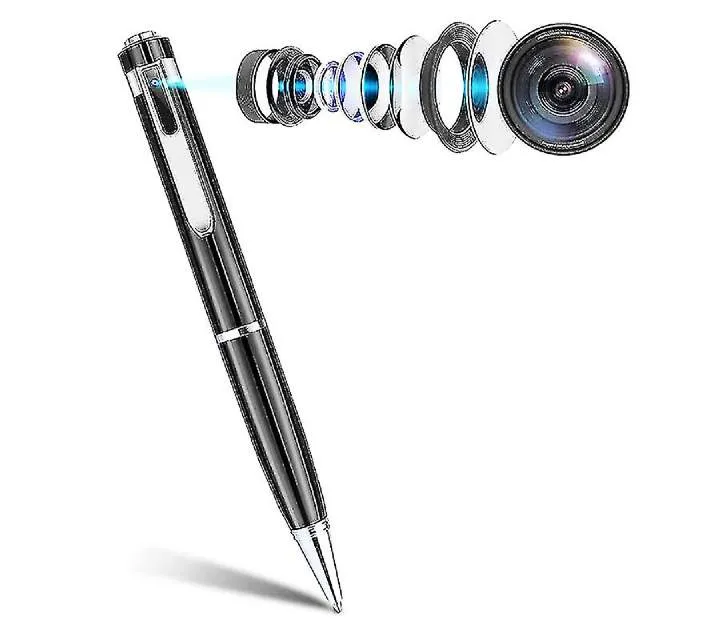
Bond’s pens have always been more than writing instruments. In GoldenEye, the pen was a Class 4 grenade; in Octopussy, it contained acid. While modern travel laws make "exploding pens" a liability rather than an asset, the Montegrappa 007 Spymaster Duo represents the ultimate "functional" gadget for the modern gentleman spy.
Bond Heritage: From the 'Live and Let Die' magnetic watch to the 'GoldenEye' Parker Jotter, Bond has always relied on everyday items that conceal extraordinary capabilities.
Technical Breakdown
- Limited Production: To maintain exclusivity, only 380 fountain pens and 380 rollerballs were produced, referencing the .380 ACP caliber favored by the Walther PPK.
- Grey-Steel Rifling: The barrel of the pen features a rifled pattern reminiscent of a gun barrel, crafted from high-grade stainless steel and brass.
- The Spy Chamber: A secret compartment is hidden within the blind cap, allowing the user to store a small scroll, a micro-SD card, or other "classified" intelligence.
- Refinement: The nib is crafted from 18k gold, ensuring that while it looks like a piece of espionage equipment, it performs as a world-class writing tool.
Explore the Spymaster Collection →
4. Advanced Prosthetics: From Dr. No to i-LIMB Bionics
In the very first Bond film, Dr. No (1962), the antagonist features crushing metal hands after losing his own to radiation. In the 1960s, a mechanical hand was the stuff of nightmares. In 2024, the i-LIMB bionic hand is a marvel of medical engineering that allows users to perform tasks with a level of precision that would have stunned Q.
Bond Heritage: Early 007 villains were often defined by their "unnatural" technological enhancements, setting the stage for Bond to eventually use similar tech for tracking and reconnaissance.
Technical Breakdown
- Myoelectric Control: The i-LIMB uses sensors placed on the user's skin to detect muscle signals. These signals are translated into movements of the prosthetic fingers.
- Individually Powered Digits: Unlike traditional prosthetics, each finger moves independently, allowing for complex grips like the "pinch" or "tripod" grip needed for using a smartphone or holding a key.
- Gesture Control: Modern versions allow users to change grip patterns via a mobile app or by making specific muscle movements.
- Aesthetic Customization: Users can opt for transparent "high-tech" covers or realistic silicone skins that mimic human anatomy.
The shift from "villainous metal hands" to "empowering bionic independence" is one of the most heartwarming ways real-life James Bond technology has evolved. It’s no longer about "super-strength"; it’s about the sophisticated restoration of human capability.
5. Wearable Intelligence: Smart Glasses and Microchip Implants
In The World is Not Enough (1999), Pierce Brosnan dons blue-tinted glasses that provide X-ray vision to spot weapons under clothing. In Casino Royale (2006), Daniel Craig has a tracking chip implanted into his arm so MI6 can monitor his vitals and location. Today, both of these concepts exist—though with slightly more practical applications.
Bond Heritage: Surveillance and tracking are the bread and butter of the double-O program. Whether it's seeing through walls or being tracked via satellite, Bond is always connected to the grid.
Technical Breakdown
- Evena Medical Eyes-On: These smart glasses are used by medical professionals to "see through" skin to map a patient’s veins, utilizing multi-spectral imaging that mirrors Bond’s X-ray tech.
- RFID Microchips: Thousands of people globally have already opted for RFID implants the size of a grain of rice. These chips allow users to unlock doors, store medical data, and pay for transit with a wave of their hand—replicating the tracking and access tech seen in Casino Royale.
- Neuralink: Elon Musk’s brain-computer interface aims to take this further, allowing users to control digital devices with thought alone, echoing the "direct-to-brain" tech often hinted at in modern spy thrillers.
As we move toward a world where our bodies and our digital identities are increasingly merged, the ethics of Bond-style tracking become a central debate. However, from a purely technical standpoint, the "untraceable" agent is now a thing of the past.
FAQ
Can anyone buy a biometric gun like the one in Skyfall? Yes, the Biofire Smart Gun is currently available for pre-order and purchase in the United States. It is marketed as a home-defense tool. However, owners must still comply with all local and federal firearm regulations.
Are there real versions of the Bond submarine car? While a commercially available, fully submersible car for the public is essentially non-existent due to safety and cost, the Gibbs Aquada remains the most successful high-speed amphibious vehicle ever produced. It successfully crossed the English Channel in record time.
How much do these "real-life" gadgets typically cost? The price range is vast. An RFID chip implant can cost as little as $100–$200, whereas the Montegrappa Spymaster Duo retails for several thousand dollars. High-end tech like the Gibbs Aquada or Biofire Smart Gun typically ranges from $1,500 into the hundreds of thousands for custom amphibious vehicles.
The Verdict: Is Life Imitating Art?
As a critic who has spent decades analyzing the best and worst of what the world has to offer, I find the transition of Bond tech into the consumer market to be a fascinating case study in human ambition. We don't just want to watch Bond; we want to occupy his world.
While we may not need to dodge assassins or infiltrate volcanic lairs, the underlying technology—biometric security, amphibious mobility, and wearable intelligence—solves real-world problems. The engineering feats required to make the Gibbs Aquada plane on water or the Biofire Gun recognize a face in milliseconds are objectively impressive. If you have the means and the inclination, the "Q Branch" is now open to the public.